Bangladesh Football's biggest opponent may be its own federation
Another SAFF campaign has ended in disappointment. But the bigger question is no longer why Bangladesh cannot win the championship. It is why the Bangladesh Football Federation has failed to build a football system capable of competing for it.
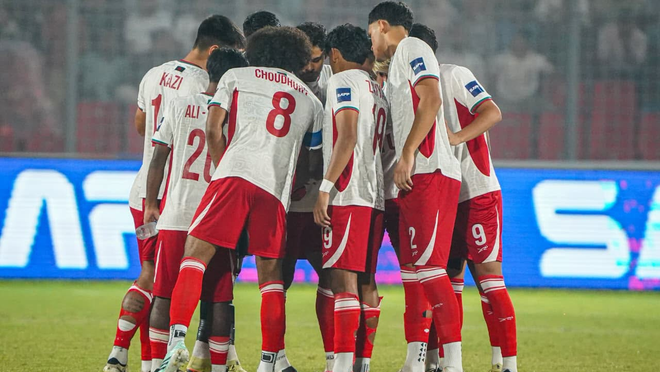
Bangladesh’s latest SAFF exit is not just about what happened against Pakistan. It is about what has been happening to the country’s football for more than two decades.
Since winning the title in 2003, the country has failed to win another championship. Bangladesh reached the final in 2005 but have not returned since. Twenty-three years without a title and 21 years without a final appearance should be a serious warning for everyone involved in running football in this country.
There is little sign of long-term progress, and the people responsible for developing the game rarely face serious questions.
For more than two decades, the BFF has failed to deliver the most basic promise of a football governing body: building a strong and sustainable football structure.
Where is the long-term plan? Where is the clear development pathway from youth football to the senior national team? Where is the consistent investment in academies, grassroots football, coaching education and player development?
These questions are not new. Yet Bangladesh continues to depend heavily on short-term preparation and individual talent instead of a strong football system.
The BFF cannot keep treating every SAFF Championship as a fresh opportunity while ignoring the problems that have existed for years. A national team cannot become competitive through motivational speeches and a few training camps before a tournament.
The domestic football structure also needs serious attention. The league must produce players who are technically strong, tactically intelligent and physically prepared for international football. Young players need regular opportunities, better coaching and a clear route into the national team.
But who is taking responsibility for making these changes happen? The federation must be questioned for the lack of visible, consistent progress in these areas. Supporters should not have to wait until another semi-final defeat to hear discussions about development and reform.
A football federation’s job is not simply to appoint a coach, organise a tournament or make public statements before an important competition. Its responsibility is to build the entire system around the national team. On that responsibility, the BFF must answer for the years of limited progress.
Possession without purpose
Bangladesh had 62% possession against Pakistan and completed 413 passes with 84% accuracy. Yet they managed only eight shots, with three on target. Their expected goals figure was just 0.36. Pakistan, with only 38% possession, produced 13 shots and an expected goals figure of 0.85.
These numbers show the difference between having the ball and knowing what to do with it. Pakistan defended with five players at the back, closed the central spaces and limited Hamza Choudhury’s influence. Bangladesh knew that Hamza was being closely marked, but the team failed to find another way to create chances.
The wide players struggled to make a difference. Crosses lacked direction, long balls were ineffective, and the attacking movements became predictable. Bangladesh had possession but rarely looked dangerous.
The physical battle was another major problem. Pakistan won around 71% of aerial duels and looked stronger in physical challenges and second-ball situations. Bangladesh struggled to match their opponents’ intensity.
This raises an important question: why are our players still struggling with the physical demands of international football? Better fitness, strength training and sports science should be basic parts of national-team preparation, not areas that become talking points after a defeat.
The decision to substitute Shuki Itofusa also raised questions. Shuki had been working hard, pressing Pakistan’s defenders and bringing energy to the game. At a time when Bangladesh needed movement and intensity, removing one of their more active players appeared questionable.
The changes in player positions also failed to create a meaningful improvement in attack. Bangladesh needed better movement, quicker passing and more creativity, but their approach remained largely predictable.
Captain Jamal Bhuiyan’s post-match comments made the situation even more concerning. He suggested that the team knew Pakistan would play with five defenders but failed to find a solution. If the players knew what was coming, why was the team not better prepared?
These are fair questions for the coaching staff. Dooley deserves time to build a team, but time must come with responsibility and visible improvement.
Poor preparation
Bangladesh also had a clear disadvantage in recovery time. They played Sri Lanka just 48 hours before the semi-final, while Pakistan had five days to prepare.
There was an opportunity to reduce the workload of important players, particularly Hamza Choudhury and Farhan, after Bangladesh had secured a comfortable advantage against Sri Lanka. Giving them an earlier rest could have helped them enter the semi-final in better condition.
That opportunity was not fully used. Against Pakistan, Bangladesh appeared to lose energy as the match progressed. Players struggled to maintain their intensity, and some experienced cramps. Dooley also acknowledged the physical problems after the match.
The schedule was not under Bangladesh’s control, but managing the squad was. Recovery, rotation and fitness planning are responsibilities of the coaching staff. These decisions can make a major difference in a short tournament.
Winning mentality
Before the tournament, BFF leadership spoke about confidence and developing a winning mentality. Such statements naturally raised expectations among supporters.
But a winning mentality is not created by saying that a team believes it can win. It comes from proper preparation, strong domestic competition, tactical discipline, physical fitness and the ability to perform under pressure.
The federation must explain how its promises are being turned into real improvements. What targets have been set? What progress has been made in youth development? How is the domestic league improving the national team’s quality? What is the plan for the next five or ten years? Supporters deserve answers, not another round of promises before the next tournament.
The late goal against Pakistan came after goalkeeper Mehedi Hasan Srabon’s throw was intercepted and turned into an assist for Abdul Samad. It was a costly mistake, but blaming Srabon alone would be unfair. Bangladesh had 86 minutes to score and failed to create enough clear chances. The defeat was the result of several problems, not one moment.
The same principle applies to the coach. Dooley’s tactical choices deserve criticism, but replacing one coach without fixing the wider structure will not solve Bangladesh football’s problems.
Bangladesh needs a serious ten-year football development plan. The same playing philosophy should be followed from youth teams to the senior national team. Grassroots football, academies, scouting and coach education need proper investment.
The domestic league must become more competitive and professionally managed. Young players need meaningful playing time, while fitness, recovery and sports science must become regular parts of player development.
The BFF must also introduce clear performance targets and publish regular progress reports. If development programmes fail, the reasons should be explained. If officials make poor decisions, they should be held accountable. Football administration should not be free from scrutiny simply because it involves a popular national sport.
The federation must stop measuring success only through short-term tournament results and start showing measurable progress in the football system.
Bangladesh does not need another round of emotional promises. It needs proper planning, professional management, investment and accountability. The supporters have done their part for decades. It is time for the people running Bangladesh football to do theirs.
Disclaimer: The views and opinions expressed in this article are those of the authors and do not necessarily reflect the views and opinions of The Business Standard and TBS Graduates.