Just hold the pose: How a few minutes of exercise could lower blood pressure
Just hold the pose: How a few minutes of exercise could lower blood pressure
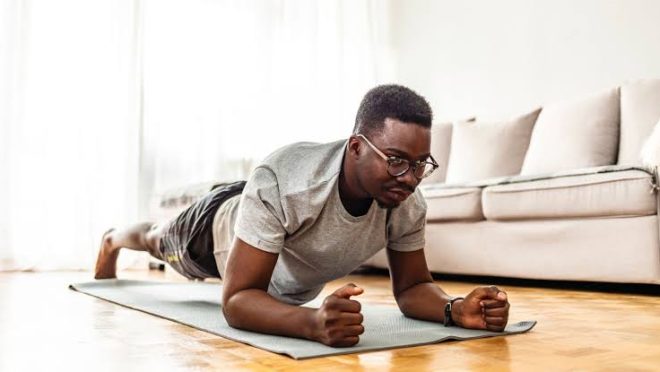
You do not always need to run, lift weights or spend hours at the gym to get meaningful health benefits. A few minutes of holding a position could be enough to make a difference.
Isometric exercises — movements where muscles are contracted without changing length — are gaining attention for their potential to improve strength and heart health. Research suggests that a routine lasting just 14 minutes, three times a week, could significantly lower blood pressure.
For people who struggle to fit regular exercise into busy schedules, that could be welcome news.
According to the World Health Organization, global physical inactivity rose by five percentage points between 2010 and 2022, reaching 31%. While most people understand the importance of exercise, finding the time and motivation to actually do it remains a challenge.
Isometric training may offer a relatively simple way to get started.
The evidence is building
Research into isometric exercise and its effects on blood pressure has been developing for decades, with evidence dating back to the 1990s suggesting that static exercises could help lower blood pressure.
A 2023 meta-analysis looked at trials conducted between 1990 and 2023 involving nearly 16,000 people. Researchers compared several forms of exercise, including aerobic workouts, weight training, combined exercise, high-intensity interval training (HIIT) and isometric exercise.
The isometric programmes focused on three exercises: handgrip exercises, wall squats and leg extensions.
The typical routine was surprisingly manageable: four two-minute bouts of an exercise, with one or two minutes of rest between them. The entire session takes around 14 minutes and is performed three times a week.
The results were striking.
Isometric exercise produced greater reductions in blood pressure than the other forms of exercise examined. Average reductions were around 8.24 mmHg in systolic blood pressure and 4.00 mmHg in diastolic pressure, compared with 4.49 and 2.53 mmHg respectively for aerobic exercise.
For comparison, standard blood-pressure medication typically reduces blood pressure by around 9/4 mmHg.
That matters because high blood pressure is one of the major risk factors for cardiovascular disease and premature death.
So, why does holding a position work?
Unlike exercises involving repeated movement, isometric exercises involve contracting a muscle and holding it in one position.
During a static hold, the contracting muscles compress nearby blood vessels. This temporarily reduces oxygen supply and causes waste products to build up in the muscle. The body responds by increasing the drive to send oxygen-rich blood to the area.
When the contraction ends, the blood vessels expand and blood flow increases. Repeating this process may, over time, contribute to lower blood pressure.
The benefits may not stop there.
Studies suggest isometric exercise can also reduce arterial stiffness and improve heart function.
It can also increase muscular strength by activating motor units — groups of nerves responsible for making muscles contract.
Dan Gordon, professor of exercise physiology at Anglia Ruskin University, said the process can help the body generate more force and potentially improve athletic performance.
Gordon, a world-record-holding track cyclist, has used isometric training himself. During his training in Manchester, he would hold a 150kg bar in a squat position before getting on his bike.
“I’d then have somebody pull the bar off and get on the bike. Because I’d fired all the motor units – bang, I could accelerate more,” he said.
The technique could also help people who are not athletes. For older adults who struggle to get up from a chair, for example, pushing down on the chair’s arms for a short period before attempting to stand could help activate the muscles needed for the movement.
A workout almost anyone can do
One of the biggest advantages of isometric exercise is its accessibility.
Melanie Rees-Roberts, a senior research fellow at the Centre for Health Services Studies at the University of Kent, said the exercises can be performed at home without equipment or much space.
“You can do it in your house; you don’t need equipment,” she said. “You don’t have to go outside if it’s raining. You don’t break too much of a sweat doing it.”
The exercises may also be useful for people with joint or mobility problems who find activities such as running or lifting weights difficult.
Jim Wiles, professor of exercise science at Canterbury Christ Church University and a co-author of the meta-analysis, said a properly performed wall squat could be safer for some people from both cardiovascular and musculoskeletal perspectives than other forms of exercise.
Should you ditch your usual workout?
Not necessarily.
If you already exercise regularly, experts do not recommend replacing cardio or other forms of training with isometric exercise altogether.
Aerobic exercise, for example, remains more effective for weight loss and improving maximal oxygen uptake, an important measure of aerobic fitness and stamina.
Instead, isometric exercises could be added to an existing routine, particularly for people whose main goal is to lower their blood pressure.
And while wall squats, handgrips and leg extensions have been well studied, researchers are less certain about whether every isometric exercise produces the same effects.
Planks are a popular example. A small 2025 randomised controlled trial involving 12 young adults found that a single session of four two-minute planks was associated with lower blood pressure 24 hours later.
However, the study was small, and its authors said larger studies involving more people and longer follow-up periods are needed.
Start slowly
The evidence behind blood-pressure reduction is largely based on two-minute holds, but that does not mean beginners should immediately attempt a two-minute wall squat at a 90-degree angle.
Wiles suggests starting at a lower intensity rather than simply shortening the exercise.
For beginners, a more upright position — around 110 to 130 degrees — may be more manageable.
Researchers also do not yet know whether shorter, more intense holds could produce similar results. There are still questions about why the two-minute duration appears to work and whether the benefits remain over months or years.
It is also unclear how effective the exercises are for people already taking medication for high blood pressure.
Those questions are now being investigated.
Wiles, Rees-Roberts and their colleagues are conducting a large randomised controlled trial involving more than 700 people with clinically high blood pressure. Participants, including some who are already taking medication, will perform wall squats at home and be followed for six months.
The research could help determine how isometric exercise should be adapted for different fitness levels and whether its benefits hold up over the longer term.
For now, the evidence offers a simple takeaway: you do not necessarily need a complicated workout, expensive equipment or hours at the gym to start improving your health.
A few minutes of wall squats, handgrip exercises or leg extensions several times a week could be a surprisingly effective place to begin.