Tired of shared AI accounts? This Bangladeshi student built his own solution
It’s the final week of the semester. And suddenly my free AI access keeps running out. I keep changing Google accounts, but the frustration keeps building up.
Tired of shared AI accounts? This Bangladeshi student built his own solution
It’s the final week of the semester. And suddenly my free AI access keeps running out. I keep changing Google accounts, but the frustration keeps building up.
I’m sure we have all found ourselves there. We search for paid accounts on Facebook and Telegram, but privacy comes at stake then we end up searching for authentic paid plans, but the price seems to be too much.
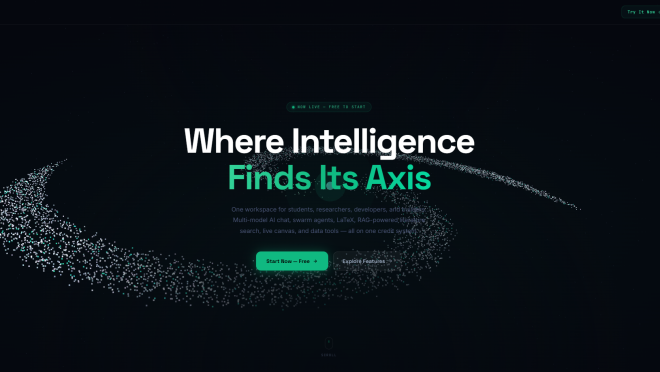
Akhlak Hossain Jim, a final-year CSE student at East West University, faced the same problem. Instead of just putting up with it, he decided to build a way out. The result is Axiom, an AI workspace made primarily for Bangladeshi university students, researchers and independent developers.
The first problem he faced was a shared AI account’s privacy. They became popular mainly because many students, freelancers and professionals can’t get a dual-currency card. But Jim points out that the seller gives the same account to multiple buyers at once.
Our chat history, our ideas, thoughts, often feelings remain visible to complete strangers. Accounts can also vanish without any warning, and suddenly all our drafts end up disappearing into thin air.
Months of effort, thesis drafts, content ideas, code and personal problems, all sitting in a space that isn’t really yours. Neither do you get the option to train your own model. “I didn’t want my own work living there, and I didn’t think anyone else should have to accept that trade,” Jim here emphasised the major concern with the idea of a shared account.
The second problem is money and timing. Global AI tools usually cost around USD20 to 23 a month. Most of us don’t use AI at a steady pace. We barely touch it for weeks, then use it nonstop before exams and deadlines.
Most AI tools cost around twenty dollars a month per tool, in USD, from Tk, and it is for something we use in bursts, Jim thought that this also doesn’t make sense. And soon this single subscription starts to feel like a trap, just like a gym membership plan.
The solution
Axiom is Jim’s project, which aimed to solve the two big problems he personally faced. He built it together with two co-founders.
It is simply a workspace where you can use major AI models, including ChatGPT, Claude and Gemini, through just one account. You get to pay in Bangladeshi taka, and you are charged only for what you actually use.
Your own private account. There are no middlemen and no shared login. According to Jim, that means your chats and account activity stay visible only to you.
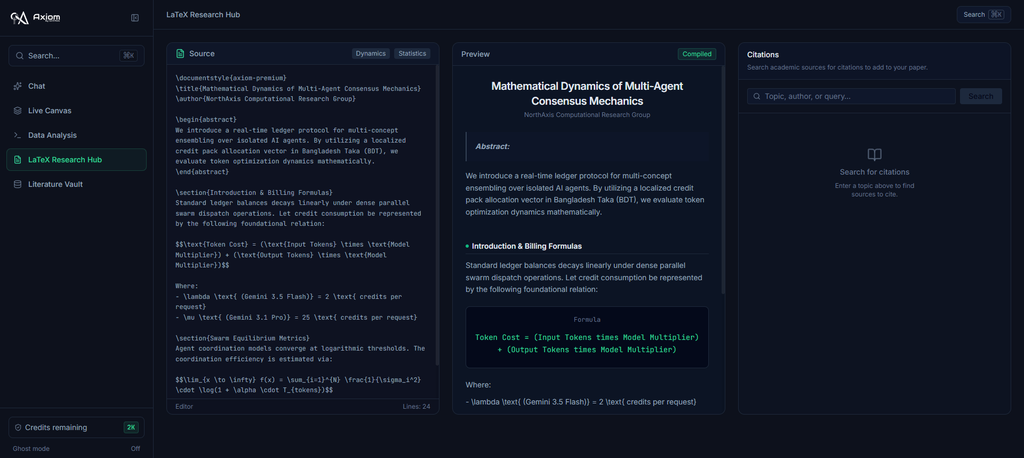
Screengrab
About the payment hurdle, Axiom currently supports mobile financial services (MFS) like bKash. The team is also working on options that suit freelancers, such as Payoneer, along with crypto payments.
Currently, free models are available. And premium models run on credits that start from as low as Tk50, and the credits stay valid for around one year. That suits the way most students use AI, in bursts.
Axiom does more than chat too. If you code, you can connect it to coding tools and agents through its API, something the shared-account market simply can’t offer. If you are a student or researcher, there is even a LaTeX editor, a literature vault and a live canvas, all built on the same account.
Purpose
Axiom didn’t start as a business plan. It started with a student trying to fix his own problem. First came the frustration, then a demo, then an actual product. According to Jim, the hardest part early on was deciding what not to build.
It is easy to sketch an “everything AI platform.” But narrowing it down to the two problems that matter locally, private access and pay-as-you-go pricing in taka, took longer than the first round of engineering.
The technical side wasn’t easy either. The team had to track usage across several AI providers accurately enough to bill in taka. They also had to keep the speed reasonable and build the payment system around bKash and Nagad.
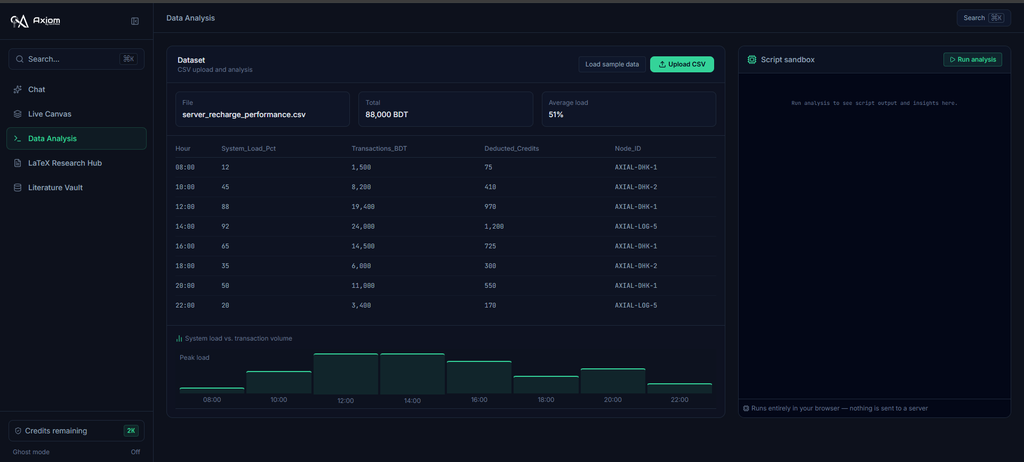
Screengrab
Axiom hasn’t raised any outside funding. It is bootstrapped entirely from Jim’s freelance income.
Jim leads product and engineering, while his co-founders Hasanul Banna Himel and Suraiya Akther Maisha work across product, design and delivery. The team is small on purpose, so every decision still happens in one conversation.
Doing all this alongside a full CSE degree and paid client work has been the hardest personal challenge, Jim admits.
Feedback and future vision
Some first-time users, including me, found the interface a little technical. Jim doesn’t deny it. The early version had a dark, power-tool feel because the first users were developers and researchers.
After getting feedback, the team has flattened the interface significantly in recent weeks. A proper light theme is next on the roadmap. Later on, he wants users to be able to customise the workspace to their own taste.
About the vision for the next five years, Jim says, for him success looks like “A Bangladeshi undergraduate being able to reach for the same class of tools as a student at MIT, without needing a foreign card, a shared account, or a favour from a senior. If we’ve made that ordinary, we’ve done our job.”
Advice for young builders
For students who want to build something meaningful, Jim has two pieces of advice.
First, build for a problem you are facing yourself. He and his classmates lived with the shared-account market for years, and that experience gave him a direction no desk research could. Second, be honest about what you don’t know yet.
The next time the final week arrives and your free access runs out, there may be another option besides borrowing a stranger’s login. For the many students who have been sharing accounts and juggling dollar payments, Axiom works with one simple idea in mind: the tools we need shouldn’t be out of reach just because of where we live.