Weak rules leave children vulnerable to toxic toys
Research has found that locally made toys, including those marketed to children, contain toxic substances. But existing laws and regulations are insufficient and outdated, making them ineffective in ensuring children’s safety
Weak rules leave children vulnerable to toxic toys
Research has found that locally made toys, including those marketed to children, contain toxic substances. But existing laws and regulations are insufficient and outdated, making them ineffective in ensuring children’s safety
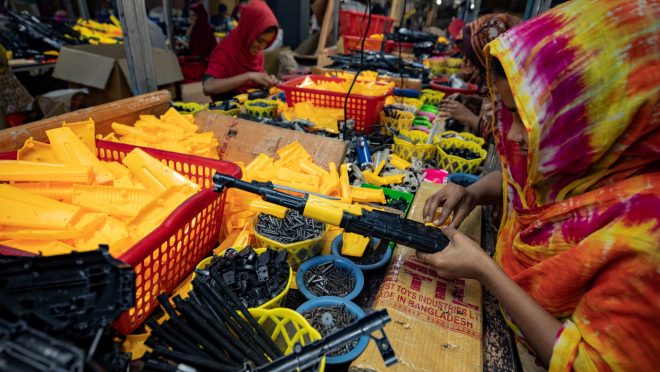
A number of recent studies on toys have revealed alarming levels of toxic substances that could pose serious health risks to children. There have long been concerns over the use of harmful materials in toys imported from overseas, including China, Thailand, and India. Research conducted on various products available in the local market has found that locally made toys, including those marketed to children, contain toxic substances such as lead, phthalates, and formaldehyde.
While these findings are certainly concerning, experts and campaigners say that children and their parents need to be more aware of the health risks these products may pose. “Toxic substances pose serious health risks to children. Parents and families need to be aware of the possible health effects of these everyday items.”
Experts in Bangladesh are sounding the alarm about toxic toys containing poisonous chemicals that can make children seriously ill. Many toys marketed in the country, which are meant to bring joy to children, are made using hazardous materials.
These substances have the potential not only to make children sick but also to cause lifelong health problems. Toxic chemicals such as lead, phthalates, and BPA can pose significant risks. Even brief exposure to lead can cause developmental disorders, impairing a child’s ability to learn and reach their full potential. Phthalates, known as endocrine disruptors, are often used to make plastic more flexible and to add scent to toys.
Phthalate exposure can pose risks to children’s reproductive health. Studies also show that people who are regularly exposed to BPA have a greater risk of obesity and other related health issues. As children frequently engage in activities involving these toys, there is growing concern among experts about the impact these toxic materials could have on children’s health in Bangladesh and around the world.
Children exposed to these toxins can suffer from a range of health problems, including poor cognitive functioning and behavioural issues. Symptoms may include hyperactivity and difficulty controlling emotions. Long-term effects can also occur, including lower IQ and learning disabilities.
In addition to the more commonly recognised health risks—such as rashes, hypersensitivity, and short-term respiratory issues—associated with toxic toys, there is also the alarming threat of cancer. Carcinogenic chemicals found in some toys can lead to cancers that may manifest decades later, including diseases such as leukemia and cancers of the brain and nervous system. Children’s bodies and organs are still developing, making them especially vulnerable to such harm.
The situation in Bangladesh is particularly concerning, as many low-income residential areas have limited access to safe and regulated toys. Strict safety measures are rarely implemented, resulting in an influx of toxic products into the market. For low-income families, safer toys are often too expensive, prompting them to opt for cheaper alternatives that may contain hazardous substances. As a result, children in these communities are especially vulnerable to potential health risks.
The health implications, combined with weak enforcement of safety regulations, create a pressing issue for children and vulnerable populations in Bangladesh. Without sufficient protective measures and awareness, many families are unable to make informed choices and avoid potential health risks. The safety standards for children’s toys in Bangladesh remain inadequate, with many products not being tested for harmful chemicals or materials before reaching the market.
Currently, existing laws and regulations are insufficient and outdated, making them ineffective in ensuring the safety of children’s toys. This regulatory gap allows products containing toxic substances to reach children, putting their health at serious risk.
In many cases, government agencies do not have the resources to test toys. They lack sufficient funds and/or personnel to effectively enforce safety regulations and ensure that safe products are marketed to children. Although laws and regulations are in place to help protect children, there has often been insufficient funding and resources to implement them effectively. Once a toxic product is discovered, it can take a long time to issue a recall.
Unlike in wealthier regions such as the United States and the European Union, where strict toy safety regulations exist with severe penalties for violations, comparable laws are absent in many African countries. Nevertheless, many toys sold in Africa contain toxic chemicals such as BPA and formaldehyde. This does not mean that illness caused by such toys is common; in fact, such cases are rare in places with strong regulatory systems and effective enforcement.
Drawing from these realities, it is now necessary to amend existing laws and regulations on toy safety in light of recent research showing the presence of toxic chemicals in toys. Testing protocols should be developed to ensure regular inspection of all toys on the market. Government funding should also be increased to enforce relevant laws and ensure that toys are safe for children to use.
Toxic substances in children’s toys pose serious health risks, and stricter regulatory standards must be both advocated for and enforced by relevant authorities. Strong laws should clearly define which materials are permissible in toy manufacturing to prevent children from being exposed to hazardous chemicals.
Greater emphasis should also be placed on testing and labelling toys. Toys should be regularly screened for toxic chemicals, and parents should be able to access clear information about the materials used in toy production, as well as any potential risks to their children. All such information should be clearly stated on product labels.
After reviewing the latest findings on toxic toys, we want to share this information with you. More importantly, we want to give you the tools to share it with families across the country. This is because most meaningful change happens in communities, where information can drive action and awareness campaigns can amplify knowledge.
We are therefore hosting workshops and events nationwide and sharing updates through our social media channels to ensure that the latest information on toxic toys reaches the families who need it most. Let us work together to educate parents and caregivers about safe and toxic toys this holiday season.
Collaboration across sectors is a crucial catalyst for improving toy safety. Governments, non-governmental organisations (NGOs), and manufacturers all have important roles to play in protecting children from toxic products. Governments can fund the research needed to identify chemical hazards that pose the greatest risks to children’s health and safety. NGOs can lead public awareness campaigns to expose toys containing toxic chemicals and mobilise public pressure on manufacturers to produce safer products. Manufacturers, in particular, have a vital responsibility to comply with safety regulations and take steps to ensure their products do not pose health risks to children.
We need your help. Community members, parents, teachers, religious leaders, and other stakeholders can join the effort to advocate for safer products and stronger policies by lending their voices to this cause. By sharing personal stories of how exposure to harmful products has affected them or their loved ones, consumers can raise awareness and push for change in both industry and government. Consumer advocacy is a powerful tool that can generate immediate attention and action.
Bangladesh can make a real difference by ensuring that children have access to safe toys that do not harm their health and development. It is up to all of us to put these recommendations into practice.

Sketch: TBS
Dr Shahriar Hossain is an environmental scientist, journalist, and social justice advocate. Contact: [email protected]
Disclaimer: The views and opinions expressed in this article are those of the author and do not necessarily reflect the opinions and views of The Business Standard.