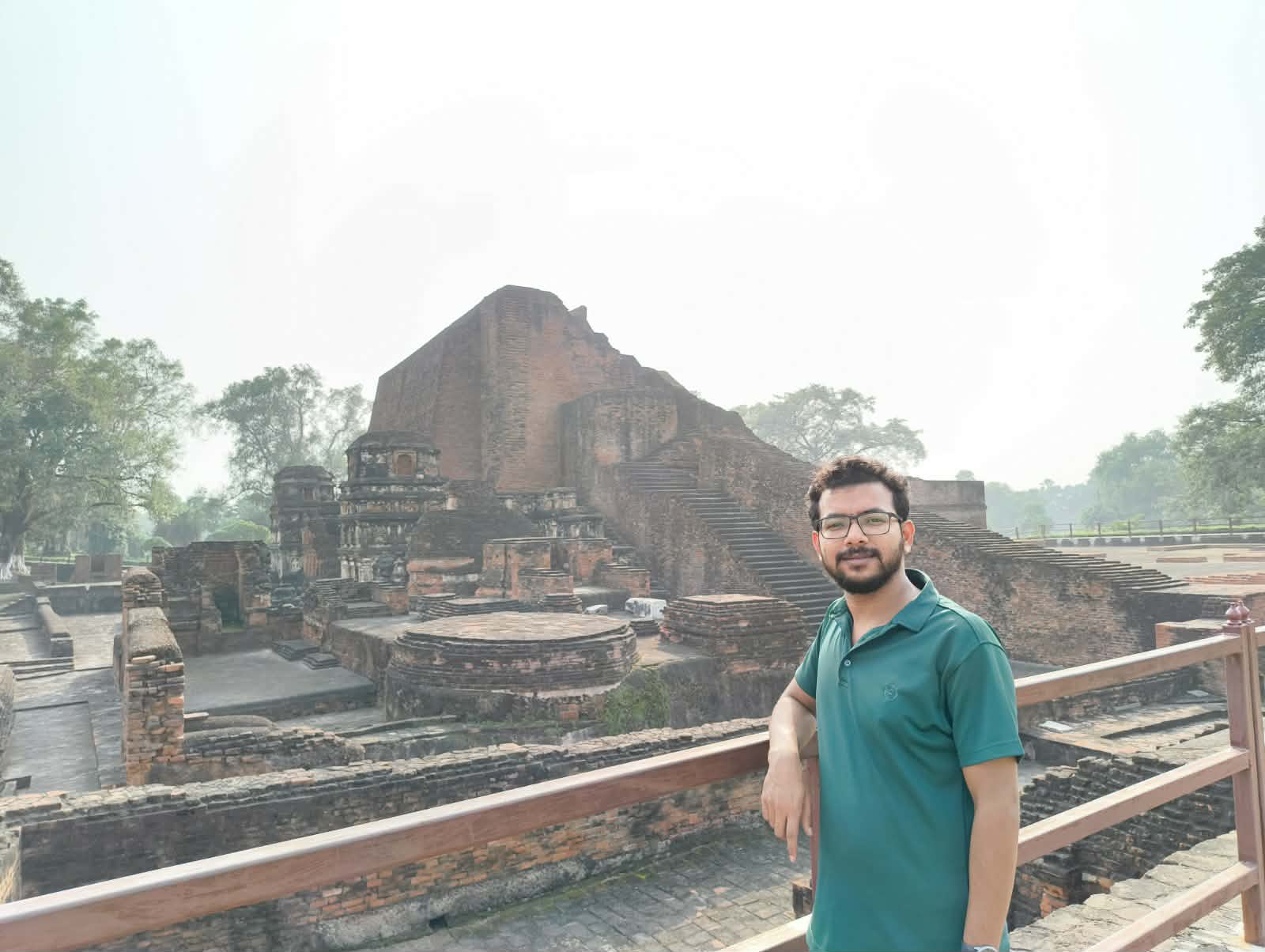
Think scholarships are only for STEM? How an English graduate earned two fully funded scholarships
For many students studying in the English departments across Bangladesh, studying abroad on a fully funded scholarship often feels like an impossible dream. Scholarships are commonly associated with STEM subjects, leaving students from Literature, Linguistics, Cultural Studies and other humanities disciplines believing that opportunities are limited.
Think scholarships are only for STEM? How an English graduate earned two fully funded scholarships
For many students studying in the English departments across Bangladesh, studying abroad on a fully funded scholarship often feels like an impossible dream. Scholarships are commonly associated with STEM subjects, leaving students from Literature, Linguistics, Cultural Studies and other humanities disciplines believing that opportunities are limited.
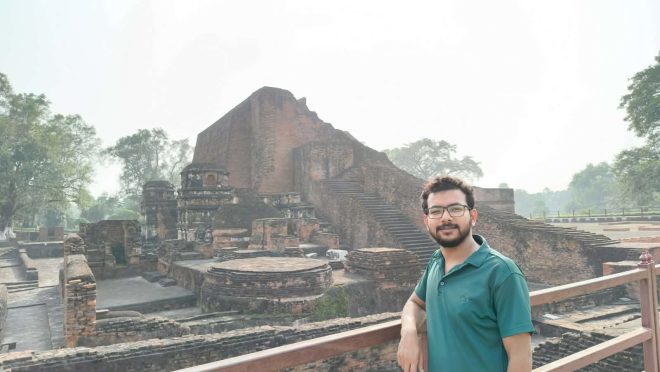
While that is true to some extent, Imamul Mottakin’s journey proves otherwise.
After completing his Bachelor’s in English at the University of Asia Pacific (UAP) and a Master’s in Cultural Studies at the University of Liberal Arts Bangladesh (ULAB), he earned a fully funded ICCR Scholarship to pursue a Master’s in World Literature at Nalanda University in India. Now, he has secured another fully funded ICCR Scholarship to begin a PhD in English at the University of Kerala.
His story demonstrates that students from English departments can also compete successfully for international scholarships, provided they prepare strategically.
“There are many opportunities for non-STEM subjects,” says Mottakin. Many students assume that fully funded scholarships are reserved for engineering, medicine or science. Mottakin believes that perception is misleading. “I have a different perspective. To some extent, it might be easy to say a fully funded scholarship is only for STEM (I also had that belief earlier), but there are many opportunities for non-STEM subjects, especially Social Sciences and Humanities.”
He explains that while undergraduate funding may be limited, postgraduate and doctoral opportunities are much broader. However, he stresses that applicants must demonstrate how their education will create an impact. “You have to remember one thing: your choice of university and field of study plays an important role in availing fully funded scholarships.” He adds, “If you wish to study abroad with a scholarship, remember one thing: how you would bring impact to your society and country. You should convince the scholarship authority or your professor that you can contribute to society what you will perceive over there.”
The Indian Council for Cultural Relations, aka ICCR, is a prestigious scholarship funded by India. It was founded on 9 April 1950 to foster and disseminate Indian cultural diplomacy and Indian Knowledge Systems (IKS) among other nations. India is a multicultural and multilingual country and is also considered a country of diversity in harmony. India has one of the most extensive knowledge systems, especially Sanskrit literary theory, linguists like Panini, Yoga, Ayurveda and many more. To introduce their cultural and linguistic heritage to the world, they have offered this scholarship since then.
Building a competitive profile
Preparation for a prestigious scholarship like this begins from the very first year of your undergraduate studies. Good grades matter, but they are only one part of a strong application.
Mottakin says, “Your CGPA is your gateway to entering this race and having a good CGPA is beneficial.” His own profile included academic excellence as well as extensive extracurricular involvement. During his undergraduate years, he graduated first in his batch, received Vice-Chancellor’s and Dean’s Awards, led a reading circle through the UAP Literary Club, won recognition in drama competitions, and presented research papers at national and international seminars.
However, CGPA alone is not enough to earn a scholarship. Mottakin adds, “Besides maintaining a good CGPA, the scholarship depends on extracurriculars because it shows that you can manage pressure, and you want to develop your skills. It is important to attend any kind of conference, seminar or internship programme where you can enhance your soft skills. A skilful person always remains one step ahead of others.”
Documents and application requirements
To apply for an ICCR Scholarship from Bangladesh, you must first register at the Suborno Jayanti Scholarship Portal. Once registered, you have to create an account on the ICCR A2A Scholarship Portal to submit your full application. Certified copies of mark sheets and certificates from all previous qualifying examinations, a copy of a valid passport with at least two years of remaining validity, a completed medical fitness form certified by a doctor or hospital, letters from two references familiar with your academic background, a statement of purpose, and a résumé are required for the application.
Mottakin advises students to carefully review each university’s admission requirements because they vary by institution and programme. “Like other scholarships, you have to make basic preparations. It depends on the specific programme and university requirements. Before applying, one must go through the requirements of their desired programme and university.”
Language requirements depend on the university. According to Mottakin, “In India, a good score on the IELTS or TOEFL (for non-STEM) is helpful.” However, he points out that ICCR applicants must also pass another assessment. “Everyone will have to undergo an English Proficiency Test (EPT) taken by the High Commission of India, irrespective of the standardised tests.”
His IELTS score, together with passing the EPT, strengthened his application.
For many scholarship applications, the Statement of Purpose (SoP) is one of the most important documents.
Mottakin explains that the ICCR Scholarship takes a slightly different approach. “For ICCR, they take a different type of SoP. You are asked to write an essay that is different from other SoPs, where you’ll highlight your achievements other than academics, such as how you overcame a challenge, or what makes you feel proud of yourself, or how you treat nature.”
He believes strong writing is essential. “No matter what, you have to write an impressive SoP or essay to get the scholarship; that’s why it is significant to have strong writing prowess to demonstrate your interest.”
Preparing for a fully funded PhD
The PhD application process is considerably more demanding than applying for a Master’s degree.
Applicants must submit a detailed research proposal demonstrating both originality and long-term impact. He also explains that the selection process involves multiple stages. “You will undergo rigorous screening (written and interview) by the university and the High Commission.”
Research experience is another important factor. “A published paper or article in a recognised national or international journal gives you an advantage. Moreover, you need to have prior research experience and keep yourself up to date with current research areas and future trends.”
One of the biggest attractions of the ICCR Scholarship is its comprehensive financial support.
According to Mottakin, students do not need to worry about the major expenses of studying abroad. In his words, “It is fully funded, which means it covers everything, for example, full tuition fees, round-trip airfare, health insurance, visa fees and your living expenses for staying in India.”
He summarises its financial benefits simply, “I consider it our job to study and enjoy the diverse culture of India, since they take care of our finances and other facilities. To sum up, it covers everything, and you don’t need to pay a single penny.”
How English students should prepare
Looking back, Mottakin believes preparation should begin from the first year of university.
“I would suggest planning from the beginning of your Bachelor’s, fixing a research area, discussing with the faculty and trying to participate in conferences to have research experience.”
He encourages students to use coursework strategically. “If you wish to study abroad, align your term paper and assignment with your research field.” Beyond academics, he recommends leadership, volunteering, seminars, internships and communication skills. “The scholarship depends on extracurriculars because it shows that you can manage pressure, and you want to develop your skills.”
For students who feel financial limitations or their academic background make studying abroad impossible, Mottakin offers a simple but powerful message: “As I always say, self-belief is important so that you can achieve what you are passionate about.”
He concludes, “If you are true to yourself, you can soar higher.”