In defence of gossiping
As an introvert, throughout the years, I’ve found that I felt it most natural to connect with people through gossip. Not because I intended to bad mouth people or had random disliking towards people. It was because I added new angles, different perspectives to topics that people were already discussing.
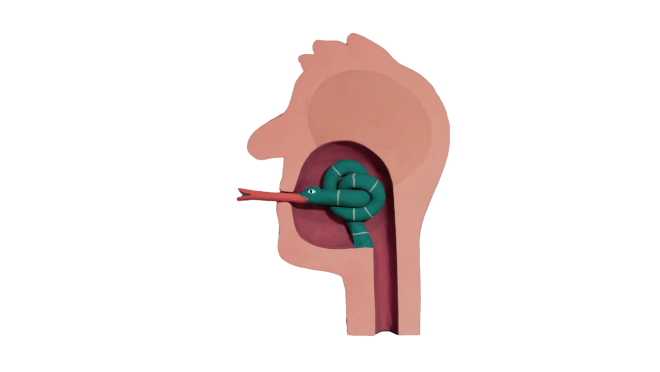
Over the years, I had realised that this habit had made me more observant. I could observe the other person at least a little bit better than the person next to me, I could anticipate people’s next move, I had grown more attentive to details.
Now, don’t get me wrong, in no way I’d ever term gossiping as a good thing, I’ve been on the receiving end of its ugly side as well and it could get to the point where you actually look forward to listening to what new they’ve made up about it. But thinking about all the different aspects really makes me think, is gossiping merely a moral obstruction or can it also be a useful tool for a sociological study of human behaviour?
Think about it. Give a group of university students a free afternoon and, within twenty minutes, somebody’s situationship, somebody else’s questionable group project contribution and a mysterious unfollow on Instagram will become matters of public interest. We could be struggling to explain a basic accounting concept in class, but somehow have a PhD-level understanding of who stopped talking to whom, when it happened and what the last seen timestamp might imply.
And the thing is, we don’t just exchange information. We interpret it, connect dots, question motives, compare past behaviour and occasionally construct an entire criminal investigation out of a person liking someone else’s story. Sometimes we’re right. Sometimes we need to get a life.
But somewhere between the speculation and the occasional character assassination, there’s a genuine human instinct at work: our desire to understand other people.
Gossip, in its simplest form, is talking about someone who isn’t present. That sounds harmless enough until you consider how quickly it can turn into something else. Yet researchers have found that gossip can also help people establish social norms, strengthen social bonds and warn one another about potentially harmful behaviour. A 2012 study by Matthew Feinberg and his colleagues, for instance, found that prosocial gossip could encourage cooperation and discourage selfish behaviour.
In other words, telling your friend that a particular group member has a habit of taking credit for everyone else’s work might actually save them from spending an entire semester doing unpaid labour for someone else’s academic glory. Is it gossip? Yes. Is it necessarily malicious? Not quite.
Of course, the more interesting part is what gossip reveals about the people doing the talking.
Every social circle has its own unwritten constitution. Nobody hands you a copy when you join a friend group, but break one of its rules and suddenly everyone seems to have read the fine print. Someone is called confident for speaking their mind, while someone else is called arrogant for doing exactly the same. A person who keeps to themselves is either mysterious or rude, depending on who’s describing them. And somehow, the person who knows everyone’s business is also the person everyone complains about knowing everyone’s business.
These contradictions are worth paying attention to. They tell us something about the values, insecurities and social hierarchies within a group. Who gets the benefit of the doubt? Whose mistakes become entertainment? Who can get away with behaviour that would ruin someone else’s reputation?
Sometimes, the person being discussed isn’t even the most interesting subject in the conversation. The reactions of everyone discussing them are.
This is where my own experience with gossip gets interesting. I’ve often found that listening to how people talk about others tells me a little about how they might eventually treat me. Someone who shares another person’s private business with me might be entertaining company today, but it would be naive to assume that I’m somehow exempt from becoming tomorrow’s topic. Someone who constantly needs to make another person the villain might also be revealing how they handle conflict, insecurity or differences in opinion.
Of course, this isn’t a foolproof personality test. Human beings are more complicated than a collection of overheard conversations, and one questionable remark shouldn’t become a lifelong character certificate. But patterns matter. The little things people repeatedly say, defend, exaggerate or dismiss can reveal more than their carefully rehearsed introductions ever will.
There is, however, a rather uncomfortable catch. Being observant doesn’t automatically make us objective. Sometimes, we notice details because we’re looking for evidence to support something we already believe. We mistake assumptions for intuition and confirmation bias for being exceptionally good at reading people. Before we know it, we’ve assigned motives to someone who was simply having a bad day.
And then there’s the other side of gossip, the part I know a little too well: being the person everyone has something to say about.
There is something uniquely exhausting about knowing that a version of you exists in other people’s conversations, a version you cannot correct because you weren’t there to hear it. Eventually, curiosity can turn into dread. You start wondering what was said, who believed it and whether the people smiling at you have heard a story about you that you haven’t even heard yourself.
That’s when gossip stops being an interesting observation of human behaviour and becomes a way of controlling someone’s reputation. A real concern shared with someone who needs to know is one thing. An invented story passed around for entertainment is another. The distinction matters, because information can protect people, but it can also isolate them.
Perhaps that’s why I don’t think the answer is to romanticise gossip or pretend that every conversation about an absent person is an act of social intelligence. Sometimes we’re genuinely concerned. Sometimes we’re trying to make sense of a confusing situation. And sometimes we’re simply bored, nosy and looking for something more interesting than our own lives. I’d rather be honest about all three possibilities.
Still, I’ve come to wonder whether we’ve been too quick to dismiss the people who pay attention to these conversations. There is a difference between someone who merely collects other people’s secrets and someone who notices the patterns behind their behaviour. One wants to know what happened. The other wants to understand why it happened, how everyone reacted and what that reaction says about the group.
Perhaps neither person needs to be called a sociologist. But the questions themselves aren’t entirely different from the ones sociology asks.
So, is gossip merely a moral failure, or can it also be an informal study of human behaviour? I think it can be both. The same conversation can offer insight into how people form relationships, enforce social rules and distribute trust, while simultaneously being unfair to the person at its centre.
Maybe the real question isn’t whether we gossip. Most of us probably do, in one form or another. It’s what we do with the information we gather, how readily we turn an observation into a verdict and whether our curiosity makes us more understanding of people or simply more confident in judging them.
And if you ever find me quietly observing a conversation at the corner of a room, don’t assume I’m judging everyone.
I’m probably just collecting data.
Though, in fairness, the sample size might be one friend group and a very suspicious Instagram follow.