Dhaka records ‘very unhealthy’ air, stands second on global pollution index
Dhaka ranked as the second most polluted city in the world on Friday morning (6 March), with an Air Quality Index (AQI) of 286 recorded at 11:53am.
Dhaka records ‘very unhealthy’ air, stands second on global pollution index
Dhaka ranked as the second most polluted city in the world on Friday morning (6 March), with an Air Quality Index (AQI) of 286 recorded at 11:53am.
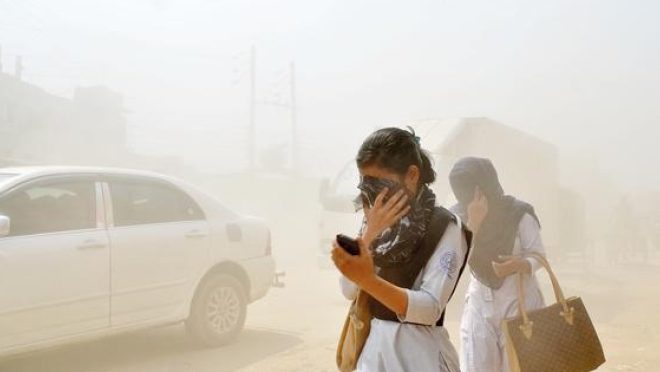
The level placed the capital’s air quality in the ‘very unhealthy’ category, signalling serious health risks for residents, according to the latest AQI report.
Lahore in Pakistan topped the list with an AQI score of 328, while Kolkata in India and Delhi in India ranked third and fourth with scores of 191 and 184, respectively.
In contrast, Batam in Indonesia recorded the world’s cleanest air, with an AQI score of 0.
According to the AQI scale, readings between 50 and 100 are considered ‘moderate’, meaning the air quality is generally acceptable, although sensitive individuals may need to limit prolonged outdoor activity.
An AQI between 101 and 150 is categorised as ‘unhealthy for sensitive groups’, while 151–200 is considered ‘unhealthy’. Levels between 201 and 300 fall into the ‘very unhealthy’ category, and anything above 301 is labelled ‘hazardous’, posing severe health risks to the population.
The AQI provides daily updates on air quality, informing residents about pollution levels and potential health impacts.
In Bangladesh, the index is calculated based on five major pollutants: particulate matter (PM2.5 and PM10), nitrogen dioxide (NO₂), carbon monoxide (CO), sulphur dioxide (SO₂), and ozone.
Dhaka has long struggled with poor air quality. Pollution levels typically worsen during the winter months and improve with the arrival of the monsoon season.
According to the World Health Organization (WHO), air pollution causes around seven million deaths globally each year, contributing to illnesses such as stroke, heart disease, chronic obstructive pulmonary disease, lung cancer, and acute respiratory infections.