Government plans smart cards for 20m teachers, students
Government plans smart cards for 20m teachers, students
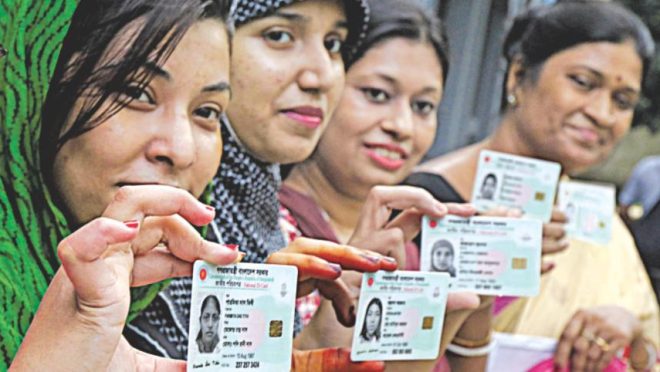
A government project has proposed providing Unified Edu IDs and smart cards to nearly 20 million teachers and students across the country as part of a plan to expand digital infrastructure in secondary and higher secondary education.
The proposed initiative, titled ‘Enhancing Technological Capability and Establishing Smart Learning Environment in Secondary and Higher Secondary Educational Institutions’, has an estimated cost of Tk18,505 crore.
The project is proposed to run from January 2027 to December 2031 and would be funded entirely by the government.
The Directorate of Secondary and Higher Education has recently sent the proposal to the Planning Commission for consideration under the Annual Development Programme for fiscal 2026-27, according to a report by Asia Post published on 23 September.
A feasibility study for the project has also been proposed at a cost of Tk4.91 crore, with the study scheduled to run until 31 December 2026. Its findings will determine the infrastructure requirements and final budget of the main project.
Under the initiative, a nationwide digital database of teachers and students would be created, supported by a central server and database system.
The Edu IDs, smart cards, servers and databases are estimated to cost Tk6,000 crore.
The project also proposes providing modern tablet computers free of charge to around 700,000 teachers at a cost of Tk2,800 crore. Each tablet is estimated to cost Tk40,000.
Another Tk2,100 crore has been proposed for training teachers in digital pedagogy, e-learning methods and interactive classroom management. The combined allocation for teachers’ devices and training would therefore stand at Tk4,900 crore.
Interactive education panels are also planned for 100,000 classrooms across 10,000 educational institutions, with Tk5,000 crore allocated for the classroom modernisation programme.
The project further proposes installing 100 Mbps broadband connections, campus area networks and free Wi-Fi at educational institutions.
A learning management system, national content repository and central monitoring and data analytics system would also be developed. Tk2,100 crore has been proposed for internet connectivity, network infrastructure and these digital systems.
The proposal also includes Tk120 crore for administrative expenses, Tk60 crore for salaries, allowances and honorariums, and Tk150 crore under a general allocation.
The project is intended to expand technology-based education and reduce the digital divide between urban and rural students at the secondary and higher secondary levels.
The proposal also highlights the need for smart classrooms and ICT facilities to support AI and coding education, as well as audio-visual and interactive technologies for more inclusive learning, including for students with special needs.
It further links the project to the government’s broader education reform goals, including developing a skilled workforce and preparing students for employment in the global market.