UK schoolgirls call for ban on school uniforms in adult content
UK schoolgirls call for ban on school uniforms in adult content
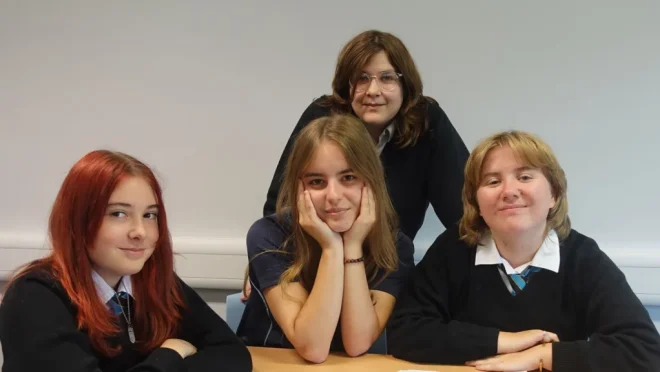
A group of teenage girls in Oxfordshire, England, are calling on the government to ban the use of school uniforms in pornography, arguing that the practice sexualises children and makes students feel unsafe in public.
The pupils, from The Cooper School in Bicester, have launched a petition that has gathered more than 26,000 signatures. They have also written to Prime Minister Andy Burnham, urging the government to take action.
“We’re not ‘sexy schoolgirls’. We’re not objects. We’re students, and more importantly, children,” the pupils said.
Members of the school’s Little Feminist Book Club launched the campaign, arguing that school uniforms are used in adult content to evoke childhood and school-age identities.
Aylin, 15, said school uniforms were meant to represent a sense of community but had been “tarnished” by sexualisation.
Another pupil, Willow, 14, said she avoids wearing her uniform in public whenever possible because it makes her feel vulnerable.
Her classmate Mae, 15, also said she felt uncomfortable walking outside in uniform out of fear of unwanted attention.
The campaigners say the issue extends beyond pornography to wider media portrayals of school uniforms. Mae recalled watching a television drama at the age of 12 in which a woman wore a sexualised schoolgirl outfit to impress a man.
“I thought to myself, tomorrow I’m going to be wearing a uniform just like that … but I’m a child,” she said.
A 2018 survey of 1,004 girls in the UK by children’s charity Plan International UK found that 35% of respondents aged 14–21 had experienced unwanted sexual attention while wearing school uniform in public.
Since launching the petition, the pupils say they have received hundreds of accounts from women describing their own experiences of being sexualised while wearing school uniform as children.
Aylin said banning the practice could help reduce the normalisation of sexualising children and contribute to a safer environment for young people.
Legal gaps and wider concerns
Clare McGlynn, a professor of law at Durham University and author of Exposed: The Problem of Extreme Porn, welcomed the campaign, saying it had brought attention to the use of school uniforms in mainstream pornography.
She said the genre of teen pornography was among the largest categories in mainstream pornography and was also associated with more violent and aggressive material.
In April 2026, the UK government agreed to legislation under the Crime and Policing Act 2026 that would make possessing or sharing pornographic content featuring adults pretending to be under 16 a criminal offence. However, the provision has yet to come into force.
McGlynn warned that the legislation might not cover all content involving school uniforms. For example, material portraying a person as 17 and wearing a school uniform might fall outside the law’s scope.
She argued that this did not reflect how such content could sexualise the image of school-age girls.
Alex Davies-Jones, the UK minister for victims, tackling violence against women and girls, and international justice, praised the pupils for speaking out.
“Young women and girls should not have to grow up seeing their school uniforms sexualised,” she said.
Davies-Jones said the proposed legal changes formed part of a wider government effort to address harmful pornography and tackle attitudes that contribute to violence and abuse against women and girls.