
‘A climate summit or a vacation?’ What Greta said, and what Bangladesh heard
There is a question I have been thinking about since COP31 in Antalya: when someone criticises the way international climate conferences operate, why do we so often end up debating the people who attend them instead of the system being criticised as a whole?
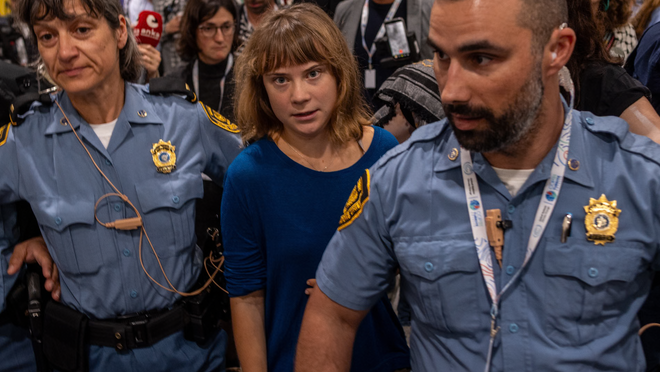
Greta Thunberg’s remarks at COP31 have opened this conversation precisely. And particularly in Bangladeshi media. But somewhere between what was said, what was intended and what was eventually circulated in parts of the Bangladeshi media, the discussion appears to have taken a different direction, as though everyone who travelled to Antalya had arrived for a three-week holiday.
That is not only an oversimplification. It misses the more important conversation.
First, it is worth understanding what Greta has actually been criticising. On 10 November, upon arriving in Antalya, she described COPs as greenwashed circuses. As an attendee at this year’s COP, I feel somewhat the same, but there’s more to it.
Her criticism was directed towards the repeated failure of climate summits to translate decades of promises into meaningful action, the influence of fossil fuel interests and the political unwillingness of political leaders, groups and countries to deliver climate commitments. She also acknowledged that COPs remain important opportunities for mobilisation and for pressuring those in power to act ‘effectively’.
In other words, her criticism was not that everyone attending a COP was there for entertainment. It was about the widening gap between the ambition presented on international stages and the reality experienced by communities on the frontlines of climate change. And that distinction does matter.
Let me be very honest. Climate tourism is not an imaginary phenomenon. International conferences, including COPs, can become attractive opportunities for networking, international exposure, institutional visibility and, for some, simply travelling to another country.
Before you convict someone of taking advantage of COP, you must ask yourself one question, i.e. how much opportunity are those ‘vacation’-going participants given to enter negotiation rooms, plenaries or meeting rooms?
That criticism deserves to exist. We should not pretend otherwise. However, treating every attendee as part of the same category is equally unfair and vague, and Bangladeshi media is specifically guilty of glamourising such narratives.
Anyone who has witnessed the operational side of an international conference knows that managing a pavilion, coordinating stakeholders, handling logistics, arranging sessions and keeping an institutional space functional can be exhausting. People spend entire days working on their feet, often dealing with last-minute changes, technical difficulties and demanding schedules. Their work may not happen inside a negotiation room, but that does not make it meaningless.
The real question, therefore, is not whether everyone at COP31 was negotiating. They were obviously not. The question is whether their presence, responsibilities and contributions are being represented accurately. This brings me to the responsibility of our media.
I find it particularly concerning when a complicated climate-related statement is reduced to a headline that creates a completely different impression. Greta’s criticism of the COP processes should have prompted a discussion about the credibility of climate diplomacy, the influence of corporate interests, the quality of participation and the difference between meaningful engagement and conference tourism.
Instead, when the coverage encourages audiences to believe that everyone attending COP31 has been on holiday, the discussion shifts from institutional accountability to personal defensiveness.
Who benefits from that shift? Answer yourself and then proceed to the next para.
Certainly not the people who are waiting for adaptation finance, climate-resilient infrastructure or meaningful support for loss and damage. Not the communities in coastal Bangladesh dealing with salinity intrusion, displacement and increasingly unpredictable climatic conditions. And certainly not the young people who want their participation to be measured by the substance of their contributions rather than the photographs they bring home. Dear reader, please make sure you have cognisance of the energy, time and money spent here.
Climate journalism demands more than translating a quotation and attaching an attention-grabbing headline. It requires understanding the difference between the Blue Zone and the Green Zone, between formal negotiations and public engagement, between Party delegates and other participants, and between a financial announcement and an actual disbursement.
For instance, Bangladesh’s COP31 climate finance developments deserved considerably more technical attention. During the conference, Bangladesh was selected to develop an investment plan seeking up to USD 30 million under the Climate Investment Funds ARISE programme. This was an important opportunity for adaptation and resilience investment, particularly for coastal communities. But being selected to develop an investment plan is not the same as receiving an unconditional transfer of funds. The distinction is essential, particularly when reporting on climate finance.
These are the questions that should dominate our climate coverage.
I am not suggesting that Greta should be beyond criticism, nor am I arguing that every person attending a COP has contributed meaningfully. In fact, her criticism should encourage us to examine our own participation more honestly.
But the same standard MUST apply to journalism as well. If a journalist cannot distinguish between criticism of an institutional process and an allegation against every individual associated with that process, then the problem extends beyond a misleading headline. It raises questions about interpretation, editorial responsibility and the basic standards of climate reporting.
Bangladesh does not need climate coverage that turns every international development into a controversy. We need journalism that interrogates power, follows the money, understands negotiations and holds both international institutions and domestic policymakers accountable.
COPs’ drafts may continue to disappoint. There will be weak outcomes, political compromises, unfulfilled promises and participants whose presence contributes little to the cause. There will also be people working tirelessly, often without visibility, to make these spaces meaningful.
Both realities can exist at the same time. The most productive response to Greta’s criticism is not to defend everyone who attended COP31, nor to dismiss the conference as a glorified holiday. It is to ask whether we are using these international platforms for what they are supposed to achieve.
Because ultimately, climate justice is not about who gets to attend a conference in Antalya or any other part of the world. It is about whether the people who never get to attend such conferences can afford to survive the climate crisis. And that is a story worth reporting, not “COP e shobai ashe vacation er jonno, bollen Greta!”