COP31 and Bangladesh: Putting people at the centre of a just transition
COP31 and Bangladesh: Putting people at the centre of a just transition
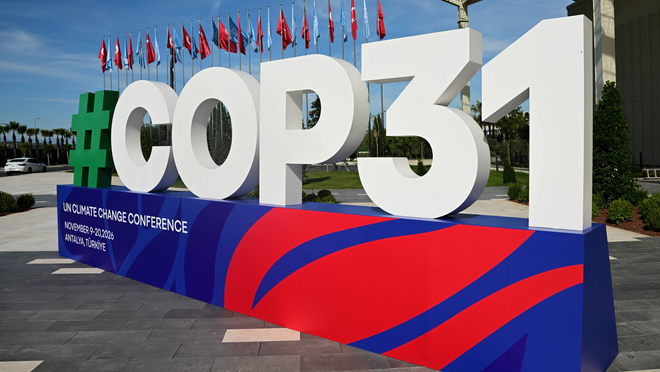
When floodwater enters a home in Bangladesh, the cost is felt immediately. A family may lose its crops, savings or place to sleep. Along the coast, salt water can turn farmland into a struggle for survival. These are problems people already face.
Yet many of the decisions that could help them are made far away, in international meeting rooms. From 9 to 20 November 2026, governments will gather in Antalya, Türkiye, for COP31, the UN climate conference.
For Bangladesh, the question is simple. Will these talks produce support that reaches people, or another set of promises that takes years to deliver?
Bangladesh has contributed very little to the emissions that have warmed the planet. But it carries a heavy share of the damage. It has valuable experience in disaster preparedness. The country should come to COP31 ready to offer solutions, not simply ask for sympathy.
A Fair Transition Must Work in Bangladesh
One important issue will be the new Just Transition Mechanism. A just transition means moving towards cleaner energy and a greener economy without leaving workers or poorer families behind.
At COP30 in Belém, Brazil, governments agreed to develop this mechanism to improve cooperation, technical support and knowledge sharing. Its detailed working arrangements are still being discussed. It is not yet an operating international fund. COP31 should help turn the agreement into a useful system.
This matters because countries do not all start from the same position. A wealthy country may be able to replace ageing power plants and retrain workers quickly. Bangladesh must expand reliable electricity, support growing industries, create jobs and keep energy affordable at the same time.
Consider a young technician learning to install solar panels, or a garment factory trying to use cleaner electricity. Both need training, finance and dependable infrastructure. A cleaner future must offer them better opportunities, not higher costs and greater uncertainty.
Women, informal workers and people in vulnerable areas must also have a say in these plans. Bangladesh should press for a mechanism that respects different national needs, offers practical technical support and creates paths to new jobs.
Climate Finance Is Also a Question of Fairness
More climate money is needed, but the amount alone says little about fairness.
A low-income coastal family cannot afford another loan to rebuild after repeated flooding. Nor should a country already paying to protect its people be forced to take on excessive debt for damage it did little to cause. Grants, which do not have to be repaid, should play a greater role, especially in adaptation and recovery.
Loans can help projects that earn revenue, including some clean energy investments. But they should not become the default answer to every climate problem.
Fair finance also means listening to local people. A village may need safe drinking water and stronger embankments. Fishers may need safer landing places and support when storms interrupt their income. Farmers may need salt-tolerant crops and reliable weather information. These priorities should not be decided entirely in offices far from the communities concerned.
Local councils, women’s groups and community organisations should help choose projects and monitor spending. Spending should be public. We should measure success by safer homes, protected incomes and reliable services, not only by how much money was approved.
International funds already provide important routes for support. The Green Climate Fund (GCF) finances work that helps developing countries cut emissions and prepare for climate impacts. The Global Environment Facility (GEF) supports environmental work, including climate action, biodiversity and protection of natural resources. Its linked funds also support adaptation in vulnerable countries.
Bangladesh needs a stronger pipeline of well-prepared projects for these institutions. That means sound studies, clear budgets, capable implementing agencies and plans for measuring results. Government bodies should work with universities, businesses and local organisations. More Bangladeshi institutions should be equipped to seek direct access to funding, rather than always depending on international partners.
The Fund for responding to Loss and Damage has a different purpose. It is meant to help vulnerable countries address harm that climate change has already caused, including losses that cannot be solved through ordinary adaptation.
Its first funding call, launched at COP30 under the Barbados Implementation Modalities, has closed, and requests are being reviewed. This is progress, but the current arrangements should not be confused with an automatic emergency payment system.
After a cyclone, affected families cannot wait through lengthy approval procedures before repairing homes or restarting work. Bangladesh should seek simpler access, grants and a faster route for urgent needs. That faster route remains a proposal to pursue, not a service already guaranteed by the Fund.
There are losses that money cannot fully replace, too. A family forced to leave its ancestral home loses more than a building. Recovery finance must recognise the damage to livelihoods, communities and cultural ties.
What Bangladesh Should Take to COP31
I attended COP30 in Belém in 2025. Looking at its outcomes, I see both progress and unfinished work. Governments agreed to develop the Just Transition Mechanism. They also called for efforts to at least triple adaptation finance by 2035. Neither step guarantees support will reach people. The main lesson for Bangladesh is that a strong statement at COP must be followed by an equally strong plan at home. Negotiation and implementation cannot be treated as separate jobs.
Bangladesh already has a foundation for that work. Its third Nationally Determined Contribution, known as NDC 3.0, sets out national climate commitments. Its National Adaptation Plan for 2023 to 2050 identifies long-term needs. COP31 proposals should be built around these priorities, rather than prepared only when a funding opportunity appears.
Bangladesh should prepare a small number of investment-ready programmes. Coastal protection, climate-resilient farming, clean and affordable electricity, stronger power networks and safer urban settlements are sensible areas to prioritise. Each proposal should show who will benefit, what it will cost and who is responsible for delivery.
At the negotiating table, Bangladesh should seek clear rules for the Just Transition Mechanism, more grant-based adaptation finance, easier access for national institutions and faster loss-and-damage support. It should work with other vulnerable countries to turn shared concerns into practical proposals.
Back home, one coordinated system could track climate funding from application to completed project. Public reports should show where money goes and what changes. Young professionals, researchers, businesses and local leaders should be part of that work.
COP matters because decisions made between countries can change what becomes possible within countries. But international agreements cannot build a flood shelter, keep a school open after a storm or restore a family’s income on their own.
Those outcomes depend on fair funding, capable institutions and public participation. For Bangladesh, that is the real measure of success at COP31: not the strength of the final speech, but the difference it makes in people’s lives.
Engr Shah Adnan Mahmood is a climate and renewable energy finance expert and the Country Lead for Bangladesh at GEOCAL, Inc.