Dear Pritilata, history hasn't forgotten you
There’s a road in Chittagong with a statue on it, easy to miss if you’re not looking for it. It marks the spot near where, in 1932, a twenty-one-year-old school teacher named Pritilata Waddedar led an armed raid on a whites-only club, and then chose to die by her own hand rather than be taken alive.
Dear Pritilata, history hasn't forgotten you
There’s a road in Chittagong with a statue on it, easy to miss if you’re not looking for it. It marks the spot near where, in 1932, a twenty-one-year-old school teacher named Pritilata Waddedar led an armed raid on a whites-only club, and then chose to die by her own hand rather than be taken alive.
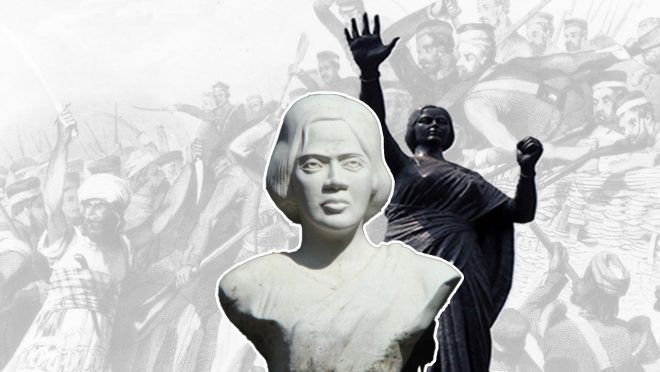
Most people outside Bangladesh and parts of India have never heard her name. Even within the region, she tends to live in the footnotes of a movement remembered mostly through its men.
She didn’t start out destined for any of this. She was born to a family of modest means, her father a clerk, and she grew up as the kind of student teachers remember, topping her exams, earning a place at one of the country’s better colleges, eventually studying philosophy in Calcutta and coming home to teach. On paper, hers was a life heading towards something quiet and respectable. Underneath it, though, she’d already been pulled into the currents of the independence movement, drawn in through student groups and reading circles long before anyone handed her a weapon.
She eventually joined the underground network built by Surya Sen, known to his followers as Masterda, a schoolteacher turned revolutionary leader who was organising armed resistance against British rule in Chittagong. Pritilata worked her way into that world gradually, running errands, carrying explosives, taking part in raids where the point was rarely to win outright but to prove that colonial power wasn’t as untouchable as it looked.
The mission that made her name was an attack on a European-only club in Pahartali, a place whose entrance carried a notice making clear that Indians, like dogs, weren’t welcome inside. Surya Sen had wanted a woman to lead the raid, partly as a statement in itself, and the role had originally gone to someone else. When that plan fell apart, Pritilata was handed command. She trained for it, planned it, and on the night of the attack dressed as a man and led her team in.
The raid succeeded in the sense that it happened at all, a direct hit on a symbol the British had assumed was safe. But Pritilata was cornered by police in the aftermath, with no way out. Like the others in her group, she’d been carrying cyanide, with instructions to use it rather than let herself be captured. She did. She was twenty-one.
What stays with you about her story isn’t really the raid itself. It’s the ordinariness of everything before it. Perhaps she wasn’t inherently born fearless. She was a good student who liked books, who became a teacher, who could easily have lived a life nobody would have written about.
Somewhere along the way she decided that the way things were wasn’t acceptable, and she kept making small choices in that direction until one of them cost her everything.
That’s usually how it goes, for most people who end up mattering. Not one dramatic leap, but a string of smaller decisions that quietly move someone from bystander to participant. It’s worth remembering that on the days we’re not asked to be brave, because those are the days the pattern actually gets set.
Her name shows up now on a college hostel, a memorial trust, the occasional plaque, mostly in places you’d have to go looking for. That feels like the wrong ratio, given what she gave up. Somewhere between a lesson in a schoolbook and a footnote in a longer story about someone else, there was a young woman who looked at what was in front of her and decided she wasn’t going to accept it. That’s a larger kind of courage than the raid itself, and probably the harder one to manage.