COP31 tensions rise over proposed delay to key climate science report
COP31 tensions rise over proposed delay to key climate science report
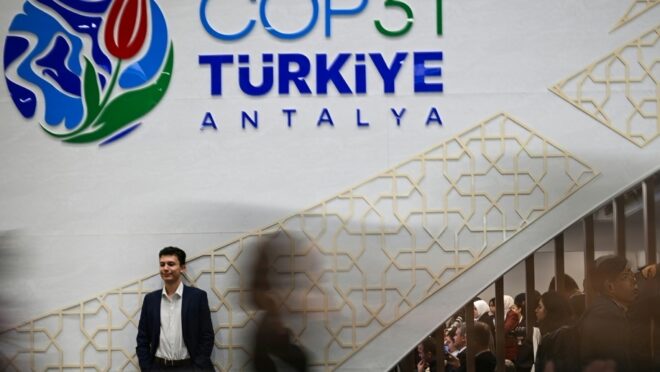
The European Union has vowed to defend climate science at the UN climate summit, accusing some countries of seeking to undermine the world’s leading scientific authority on global warming.
A dispute over the publication timeline of the Intergovernmental Panel on Climate Change’s (IPCC) next major reports has spilled into COP31 negotiations in Turkey, threatening to complicate efforts to reach a final agreement.
Dozens of countries across Europe, Africa and the Pacific want the next set of IPCC reports published in time to inform a crucial global assessment of carbon-cutting efforts at the 2028 climate summit.
However, a smaller group of countries, including Saudi Arabia, China and India, is pushing to delay the IPCC’s seventh assessment report until 2029.
The IPCC suspended its last meeting after failing to resolve the disagreement and is hoping for a breakthrough at its next session in December.
There is growing pressure to address the dispute at COP31 by including the issue in the summit’s final decision, adding to tensions as negotiations approach their halfway point.
“We will fight for this outcome to be there,” senior EU climate official Diana Acconcia told reporters, acknowledging that bridging the divide would “not be so easy”.
“There are some parties that are trying to undermine what science is telling us because they don’t want to do what it takes to address climate change,” Acconcia said, describing the debate as “polarised”.
UN Secretary-General Antonio Guterres on Friday praised the “remarkable” work of the IPCC and said he hoped its next report would be published “ideally before the next stocktake”.
The IPCC publishes comprehensive assessments roughly every seven years, providing authoritative scientific evaluations of climate change to inform global policy decisions.
Pierre Friedlingstein, a climate scientist at the University of Exeter and author of previous IPCC assessments, said policy decisions should be based on the most up-to-date scientific evidence.
“Updated figures are more appropriate than figures that are seven years old,” he told AFP in Antalya, adding that new findings could help advance political decisions on climate action.
Some countries fear that updated findings could expose the gap between existing climate commitments and the measures needed to limit global warming ahead of the 2028 stocktake, several negotiators told AFP.
IPCC chairman Jim Skea acknowledged the challenges posed by the dispute, saying the ongoing impasse created operational difficulties and reputational risks for the panel.
Skea urged delegates to use their influence to secure a successful outcome at the December meeting, reminding them that IPCC scientists volunteer their time to prepare the reports.
Observers remain pessimistic about resolving the disagreement at COP31, where decisions require consensus among nearly 200 participating countries. However, there are efforts to recognise the “central role” of IPCC science in the summit’s final agreement.
Countries supporting a delay argue that developing nations need more time to review the thousands of pages of technical scientific findings.
However, the Alliance of Small Island States and the Least Developed Countries group, representing more than 70 developing nations, have already backed publication of the report in 2028.
“We would like to have it as soon as possible, and as detailed as possible,” Ivory Coast Environment Minister Abou Bamba told AFP.