El Nino watch: the impacts around the world this week
El Nino watch: the impacts around the world this week
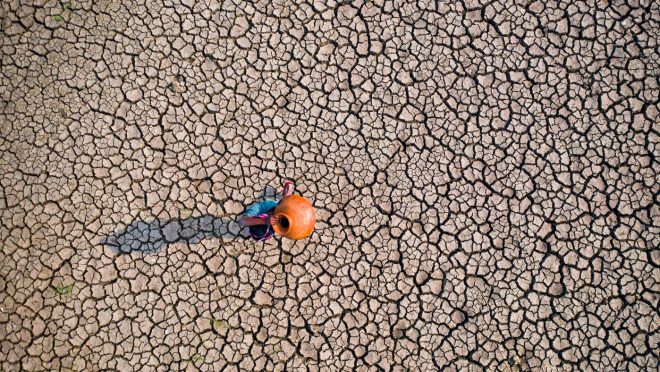
The effects of El Nino are being felt globally, ranging from floods in Argentina and deadly fires in Peru to drought in French Guiana, prompting a UN call for swift action to face an unprecedented “wrecking ball” this year.
El Nino warms surface temperatures in the central and eastern equatorial Pacific Ocean, bringing worldwide changes in wind, pressure and rainfall patterns.
It typically occurs every two to seven years and lasts around nine to 12 months.
The naturally occurring weather phenomenon is set to bring higher temperatures to much of the planet this year, with its impact compounding the effects of human-induced climate change.
‘Unprecedented’
“The current El Nino event could be unprecedented in strength: literally off the monitoring charts that we have used for the past four decades,” said Celeste Saulo, head of the UN’s weather and climate agency, the World Meteorological Organization.
She and UN aid chief Tom Fletcher issued a joint call for “urgent and coordinated anticipatory action” to protect the most vulnerable communities already living on the edge.
“We cannot stop El Nino, but we can prevent many of its worst human consequences,” said Saulo.
Fletcher said El Nino was a “wrecking ball” that would bring havoc to Latin America, eastern and southern Africa, Asia and the Pacific.
“The risk is you have tens of millions of people pushed into humanitarian need,” he said, warning that 50 million people could face increased hunger.
Flooding in Argentina
“From one day to the next, a metre of water rushed into my house,” Juan Pablo Gomez, a resident of the north-eastern Argentinian tourist town of Paso de la Patria, told AFP.
The flooding linked to El Nino has claimed two lives in recent days, and in some parts of the town only the rooftops of houses remain above water.
Last week, more than 2,000 people had to leave their homes in the north-east of the country due to heavy rainfall that swelled the Parana, Uruguay and Iguazu rivers, which separately border Argentina, Brazil, Paraguay and Uruguay.
These rains are linked to El Nino.
Deadly fires in Peru
“We have a huge mass of hot, dry air over the whole of Peru as a result of El Nino,” biologist Daniel Valle, a professor at the Scientific University of the South in Lima, told AFP, explaining the deadly fires in Peru.
Valle said the flames spread quickly due to high temperatures and dry conditions caused by the weather phenomenon.
At least 12 people have died since June in forest fires that have left hundreds of people affected by the disaster, authorities said last week.
Most of the dead are farmers who suffered severe burns and asphyxiation as they tried to control the flames on their own.
Drought in French Guiana
French Guiana has been experiencing a significant rainfall deficit for several months.
River traffic has gradually come to a halt due to a sharp drop in the water levels of the French overseas territory’s waterways.
The authorities have set up an air bridge to supply about 40,000 residents of isolated municipalities with no road access.
The goal is to ensure the delivery of essential goods at reasonable prices, maintain public education services and keep drinking water production systems functioning properly, including along the coast.
El Nino in figures
The International Organization for Migration (IOM) says 874,000 people could be forced to leave their homes in Somalia over the next three months due to flooding.
The rainy season is expected, according to forecasts, to bring above-normal precipitation to the country as El Nino strengthens, the IOM warned last week.
The agency says it has obtained only about 14.4% of the $16.6 million needed to prepare its response to the floods.
Colombia has recorded four consecutive months of record monthly temperatures, with the thermometer there about 1.5°C above normal in July, August and September, according to an AFP analysis of data from the European Copernicus Climate Change Service.
When is El Nino responsible?
In the face of increasingly frequent extreme events, it is difficult to formally attribute a specific event to El Nino.
“El Nino be compared to a highway with weather phenomena like the vehicles on it. El Nino does not let predict the speed of a particular vehicle, nor the lane it’s in, and sometimes vehicles suddenly exit or enter the highway,” Michelle L’Heureux, a physicist at the US National Weather Service, NOAA, told AFP.
“Similarly, the specific characteristics of weather phenomena will be influenced by factors other than El Nino,” she said.
“However, El Nino can make certain weather events more or less likely over the course of a season. We simply can’t attribute an entire weather phenomenon or associated extreme event solely to El Nino, because other factors also play an important role”.
Davide Faranda, research director at France’s National Centre for Scientific Research (CNRS), said: “It is incorrect to directly attribute a particular event to El Nino because its effects vary by region and season, and also depend on the natural variability of the climate and other meteorological factors”.