When floods hit, dignity suffers: Study reveals sanitation crisis for people with disabilities in Bangladesh
Climate change is intensifying floods and cyclones across Bangladesh, but a new study shows that their impact goes far beyond damaged homes and infrastructure.
When floods hit, dignity suffers: Study reveals sanitation crisis for people with disabilities in Bangladesh
Climate change is intensifying floods and cyclones across Bangladesh, but a new study shows that their impact goes far beyond damaged homes and infrastructure.
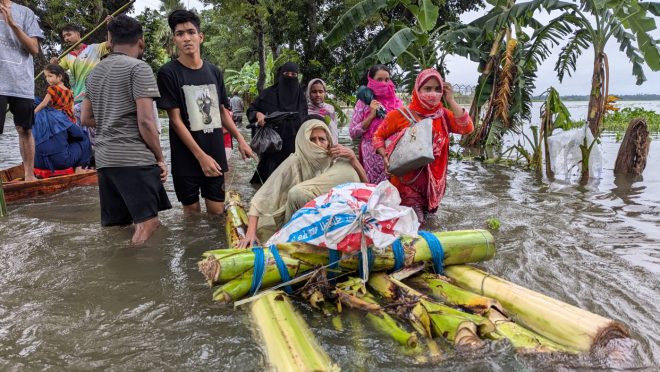
For people with disabilities, extreme weather events are creating a silent sanitation crisis, exposing them to heightened health risks, loss of dignity, and increased dependence on caregivers.
The research, based on a nationwide mixed-methods study, examined how climate-related disasters affect sanitation access and experiences among people with disabilities. Conducted by Shahpara Nawaz and an international team of researchers from institutions including the International Centre for Diarrhoeal Disease Research, Bangladesh (icddr,b), the London School of Hygiene and Tropical Medicine, and the University of Leeds, the study combines large-scale survey data with in-depth qualitative insights.
The quantitative component surveyed more than 1,900 individuals across 32 districts, comparing people with and without disabilities. Using statistical models, the researchers assessed the extent of sanitation facility damage, the use of alternative facilities, and behavioural changes during and after floods and cyclones. This was complemented by interviews and photovoice exercises in climate-vulnerable districts such as Satkhira and Gaibandha, capturing lived experiences in detail.
The findings show that people with disabilities face a higher risk of sanitation facility damage during extreme weather events, with an adjusted risk ratio of 1.28 compared to those without disabilities. Socioeconomic status plays a critical role, as individuals in the wealthiest group were significantly less likely to experience damage than those in the poorest, highlighting how poverty and disability intersect to increase vulnerability.
Beyond infrastructure damage, the study reveals severe accessibility challenges. Floodwaters often render paths to toilets muddy and dangerous, leading to frequent injuries for both people with disabilities and their caregivers. In many cases, accessing alternative facilities becomes nearly impossible. Some participants reported facing verbal abuse when attempting to use neighbours’ toilets, forcing them to continue using damaged facilities or resort to open defecation.
The research also uncovers deeply personal and gendered impacts. Many individuals with disabilities, particularly women, reported restricting their use of sanitation facilities due to concerns about privacy and safety. This often led to reduced food and water intake, increasing health risks. For those with incontinence, the inability to reach facilities in time resulted in soiled clothing and bedding, further exposing them to infection and social stigma.
Caregivers, too, face significant strain. The physical demands of assisting individuals through flooded and unsafe environments often lead to injuries, while the emotional burden of constant support intensifies during disasters. The study highlights how these pressures can disrupt livelihoods and deepen existing inequalities.
The most important finding is that climate-related disasters do not affect all populations equally. For people with disabilities, floods and cyclones amplify existing barriers to sanitation, increasing exposure to waste, health risks, and social exclusion. Without targeted, disability-inclusive and climate-resilient sanitation systems, these inequalities are likely to worsen, undermining both public health and human dignity.