The Stranger: Are we judged for what we feel or what we show?
The Stranger by Albert Camus is one of the most well-written and mind-bending novels that makes readers question how they perceive the meaning of life, societal norms, and human emotions.
The Stranger: Are we judged for what we feel or what we show?
The Stranger by Albert Camus is one of the most well-written and mind-bending novels that makes readers question how they perceive the meaning of life, societal norms, and human emotions.
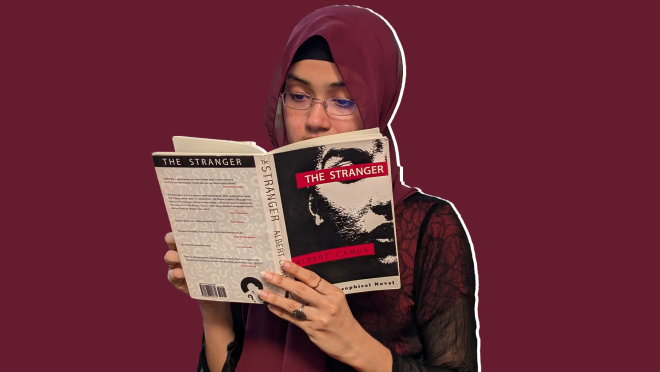
While some readers might judge the protagonist based on his deeds and his apparent indifference towards extremely distressing incidents, others might try to comprehend him and the entire circumstances of his life.
What I find specifically unsettling is how this novel challenges our usual perception of emotions and how we judge human beings based on the way they express their emotions.
The novel depicts the protagonist, Meursault, as an individual who is sordid and emotionally suppressed. He is someone who does not seem to be truly aware of how he feels, what he feels, or how to process those feelings as well. He can also be considered an antisocial individual who appears apathetic towards his own mother’s death.
After all, he is a human being who kills an Arab man and, while being convicted of murder, finds himself questioning the absurdity of his judgement and fate.
The plot is somewhat unsettling. The novel shows the miserable consequences of someone detached from usual societal norms and how such detachment can lead to situations from which there is no coming back.
Starting from the death of his mother to his own impending execution, the story follows Meursault as he continues to live his life, seemingly accepting everything as it comes.
His reaction to his mother’s death is rather thought-provoking. He sits by himself and continues leading his life as usual, which might seem like a “mature” and “normal” way of coping to some people, while to others, it might seem quite unusual.
And as he leads his life, accepting his mother’s death in his own way, he falls into an unprecedented situation: he kills an Arab man and is convicted of murder.
Yet, what seems particularly absurd is that he is judged not by his ability to commit such a crime but rather by his lack of emotional sensibility. His inability to express grief and remorse in ways that society expects him to makes his judgement seem even more absurd to him. He finds the whole process despicable, yet ultimately, he must accept his fate. He hopes for a release, though he finds the idea of an afterlife something irrevocably illogical.
As he waits for his execution, he thinks about what his mother once told him and what she might’ve felt before her death. Perhaps there was a chance of absolution, a chance to come to terms with reality, the afterlife, and everything in between.
He finds the whole idea of reality absurd and meaningless, but he also realises how “better” his life was before he found himself in this situation. Ultimately, he must accept the fact that everyone is sentenced to death simply by virtue of being alive, and so is he.
This book can confuse people in so many ways.
Some readers might view the character as a psychopath because who else would stay indifferent to the death of their own parents? But others might see the character as an adult who is almost capable of “handling” their emotions better.
After all, not everyone grieves in the same way, and perhaps it might not necessarily mean the same thing to another. But overall, the novel delineates a strong introspective image of human existence.
Meursault is a social being, bound and constrained by societal norms. Norms include displaying strong empathy, which might or might not be real, showing guilt, and expressing emotions and attributes such as anger, sadness, rage, affection, and care. But who can exactly know what goes on inside someone’s head?
A social being might not be able to follow or abide by these norms and yet still be considered a part of society, although perhaps only in a gullible way. And when someone fails to behave the way society expects them to, does that necessarily mean they are incapable of feeling? Or does it simply mean that they do not express their feelings in ways that others can understand?
Furthermore, this book shows how life can take you to turning points where there’s no coming back, where you are obliged to accept your fate, even when you find it to be the most bizarre thing you could encounter.
Thus, Meursault concludes his life with a sense of absurdity and meaninglessness, yet finds a strange sense of emancipation in the thought of his own execution. Perhaps the most unsettling part is that, in the end, it is not just Meursault who must confront the absurdity of life and death. It is also the reader who is left questioning the norms we live by, the emotions we expect from others, and the meanings we attach to our existence.