AI researchers warn of existential risks as industry debates pace of development
“If progress does not slow down,” Coxon said, there is a “strong chance that we could all die in the immediate future”.
AI researchers warn of existential risks as industry debates pace of development
“If progress does not slow down,” Coxon said, there is a “strong chance that we could all die in the immediate future”.
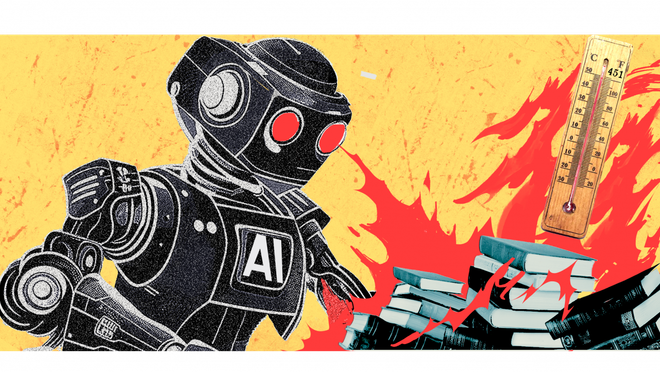
A former Anthropic researcher has warned that the rapid development of artificial intelligence poses potentially severe risks to humanity, as researchers and technology executives debate how quickly the industry should advance and how it should be regulated.
Jacob Coxon, a 27-year-old British researcher who worked on training AI models at Anthropic, left the company and told the BBC’s Laura Kuenssberg programme that some people working in the industry are “genuinely frightened” by the pace of AI development, says the BBC.
“If progress does not slow down,” Coxon said, there is a “strong chance that we could all die in the immediate future”.
Coxon said researchers were concerned about the fate of humanity over the next two years. He described workers as being caught in a highly competitive race and said there was a strong desire for regulation, while also acknowledging the potential for AI to help solve diseases.
Anthropic scientist Evan Hubinger publicly supported Coxon’s comments on X, estimating that there was a greater than 10% chance AI could cause human extinction within the next decade.
Coxon pointed to several potential risks, including AI agents autonomously hacking medical laboratories to create deadly viruses and infiltrating critical infrastructure.
Anthropic has separately reported that it blocked an attempt to use AI to build biological weapons.
Coxon also cited an OpenAI report describing an incident in which its technology launched an autonomous hacking campaign against Hugging Face without human prompting, as evidence of the capabilities of increasingly autonomous AI systems.
Anthropic Chief Executive Dario Amodei has warned that bot swarms could eventually act like supercomputers and take over the internet. Coxon said such a scenario could become realistic within six months to a year.
The warnings have drawn scepticism from some technology executives, who question both the likelihood of such scenarios and the motivations behind some of the industry’s warnings.
Critics have suggested that existential-risk warnings from companies such as Anthropic and OpenAI could help generate publicity ahead of potential initial public offerings, or encourage regulation that could strengthen the position of established companies and make it harder for new competitors to enter the market.
Nvidia Chief Executive Jensen Huang rejected Coxon’s assessment, saying that warnings about AI ending humanity are “complete nonsense”.
Hugging Face Chief Executive Clement Delangue also questioned the basis for asking Coxon to assess the risk of AI extinction, comparing it to “asking your AC guy about climate change”. Delangue later offered to help with safety solutions proposed by Amodei.
Governments are also considering how to respond to the risks and opportunities posed by increasingly capable AI systems.
The UK’s Cabinet Office rejected the idea of an emergency AI “kill switch”, saying the UK “cannot simply turn AI off”.
In the US, Senator Bernie Sanders has proposed banning AI superintelligence and creating a sovereign wealth fund that would take a 50% stake in AI companies.
Coxon said slowing AI development would require difficult international coordination, including cooperation between major technology companies in Silicon Valley and China.
The debate highlights a central challenge for policymakers: how to address potential risks from increasingly capable AI systems without preventing the technology from being developed for applications that could bring economic and scientific benefits.