The darker aspects of the ‘Nobel’ men
“Once you’ve been to Cambodia, you’ll never stop wanting to beat Henry Kissinger to death with your bare hands.” Anthony Bourdain (Book: A Cook’s Tour)
The darker aspects of the ‘Nobel’ men
“Once you’ve been to Cambodia, you’ll never stop wanting to beat Henry Kissinger to death with your bare hands.” Anthony Bourdain (Book: A Cook’s Tour)
The Mekong River flowing through the distant hills in Cambodia did not know what lay ahead. Cambodia, being a neutral country officially, may have thought that the bombing of their neighbours in Vietnam would not affect their own tranquillity.
Henry Kissinger had other plans. It was obvious the Cambodian villagers were sympathetic, and supply lines containing food, rations and even ammunition flowed through the Mekong into the jungles of Vietnam. So, he decided to do what any rational, law-abiding imperialist would: drop 2.7 million tons of bombs, killing how many we don’t truly know yet. Since the campaigns were kept secret even from Congress and the Pentagon did not disclose the operation even in its official records, third-party estimates put the number between 50,000 and 150,000.
That’s not the worst part. After laying waste to Cambodia and Vietnam, dear Henry got a historic phone call from Norway in 1973, for he had just won the coveted Nobel Peace Prize.
On 12 December 2013 in Yemen, a minibus full of excited family members was heading into town for a wedding celebration. The bride was their pride and joy, and she had hoped to start her new life with festivities full of joy and celebration. Full of the jitters that are expected for a newlywed, she had hoped her new life might bring about a positive turn.
Soon after she had left her house, riding the minibus towards the ceremony, a drone struck her vehicle with cruise missiles, killing her father and 12 of her family members right there. She luckily escaped with her life.
Who could have done such a thing, you ask? An executive order to use lethal weapons on suspected terrorists, signed by the beloved, inspirational figure Barack Obama.
Obama’s campaign for Hope and Change had led many to believe that America was headed in the right direction. Unlike the Yemeni girl mentioned above, Obama’s life had the divine privilege of not being under attack from the skies.
He campaigned hard, said all the right words, and some of the ever-racist white Christian rednecks even voted for him. Being a mixed-race Black man with a funny Muslim name, Obama himself may have believed his election win was groundbreaking. The Nobel Committee agreed and awarded him the Nobel Peace Prize in 2009. Not for his policies or humanitarian measures; he had just got to the White House. They awarded him the prize just for winning, i.e. existing as the beacon for Hope and Change.
What followed was neither. Backed by the same donor money of the Bushes and Clintons, Obama’s policies seldom deviated from the convention, and, more surprisingly, his policies and directives in the Middle East had killed more civilians than Trump’s have as of this writing.
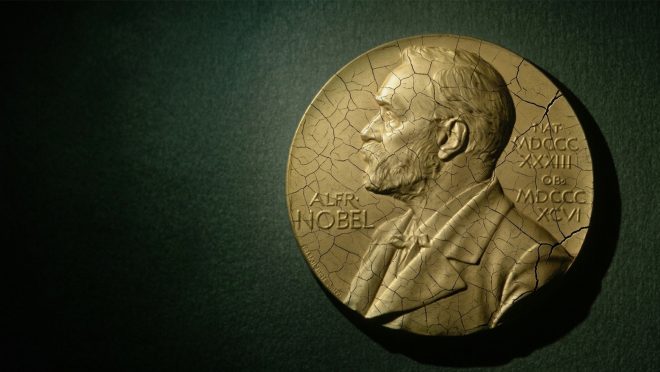
But who could’ve thought that the once-inspirational Obama’s decisions would lead to literally thousands being murdered? Certainly, the Nobel Committee didn’t. The Americans may not have seen colour in the 2008 elections, but I doubt the same could be said for the Scandinavians handing out the golden coins embodying the image of a weapons manufacturer.
Spending nearly 21 years in complete isolation from the world in pursuit of your democratic principles is a commendable act of defiance, no doubt. Aung San Suu Kyi’s sacrifice had finally brought Myanmar the coveted democracy, and in 2015, she was unequivocally declared the country’s State Counsellor. Because a military-crafted constitutional clause barred anyone with foreign family members from being president, still, she had done it: Myanmar was finally democratic.
Just one year later, the military initiated a ‘clearance operation’ and by 2017, thousands upon thousands of Rohingya refugees started coming up the shores of Bangladesh. And now, Bangladesh hosts 1.2 million Rohingyas, according to UNHCR.
The dear democracy-craving Suu Kyi downplayed the military’s actions, claiming the crisis was fuelled by a “huge iceberg of misinformation”. Her administration went as far as blocking UN aid agencies from delivering life-saving emergency supplies to affected zones.
The pinnacle of her downfall from grace occurred when she travelled to The Hague to personally defend the Myanmar military against charges of genocide. Standing before the court, she argued the operations were a legitimate counter-insurgency response and asked the court not to interfere.
Then again, who could’ve predicted this? Certainly not 12 people in Scandinavia.
And what could be said about our own Nobel Peace Prize winner, whose direct policies led to Bangladesh not purchasing measles vaccinations, leading to more than 1,100 deaths? Could the Nobel Committee in 2006 have foreseen a man acting in his own interest rather than considering the greater consequence of his actions? Certainly not, since the committee overlooked thousands of murdered civilians in the 70s. Expecting it to do due diligence in the 21st century cannot be deemed fair.
All of these examples are cited not to denounce the Nobel Prize nor to diminish its importance on the global stage. Rather, it is imperative to put the Nobel Prize and its impact in context. The committee doesn’t exist outside the sphere of influence. It doesn’t matter if the nominations are secret, and it doesn’t matter how much they say that politics isn’t considered while deciding upon who gets awarded.
Their record and the impact of their stamp of approval have not only acted as an inspiration for scientific advancement, but have also helped legitimise war crimes. And much like the legacies of Kissinger or Suu Kyi, those Scandinavians have blood on their hands. We should not forget the stain so easily.