Bangladesh's surfing pioneers are ready for the Asian Games, but funding remains elusive
Mannan works at a jewellery stall at Sugandha Point between training sessions. Fatema, on the other hand, has been told, more than once, that surfing will tan her skin and hurt her chances of getting married.
Bangladesh's surfing pioneers are ready for the Asian Games, but funding remains elusive
Mannan works at a jewellery stall at Sugandha Point between training sessions. Fatema, on the other hand, has been told, more than once, that surfing will tan her skin and hurt her chances of getting married.
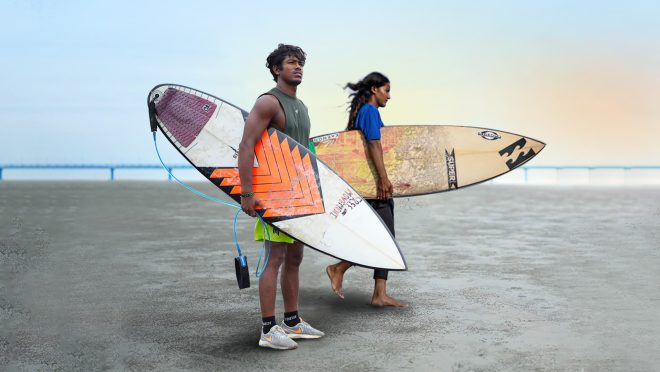
Between them, that’s what it currently costs to be a Bangladeshi surfer headed to the Asian Games.
Mohammad Mannan and Fatema Akhtar secured the championship titles in the boys’ and girls’ categories at the national surfing competition, both representing the Bangladesh Surf Girls and Boys Club, and both are now ready to take surfing to the international stage. They’ve qualified to represent Bangladesh in Japan this September. I spoke to both of them to learn the tale behind their success.
The beginning
Mannan’s surfing journey started with an interest in his friend Murad’s skateboard. That interest soon led him to skate in the middle of the sea, at just 14 years old. Mannan left his studies young and started working part-time to support his family, and amid all that responsibility, he found relief in the sea. He fought with his family, was scolded and beaten, but nothing stopped him from surfing. Eventually, his family gave in, and the sea became his home.
Fatema found surfing at 11 while hanging out with friends at the beachside, and it immediately caught her attention. For a while, she hid it from her own family to keep going. The local belief was that the beach was a place for boys, and Fatema had to fight to earn her place in the water. She shared that she doesn’t have a father, and her mother had to hear a lot because the community had a lot to say. They looked down on why a girl should go surfing at all, until Rashed bhai, Rashed Alom, owner of the Bangladesh Surf Girls and Boys Club, stepped in and convinced her mother.
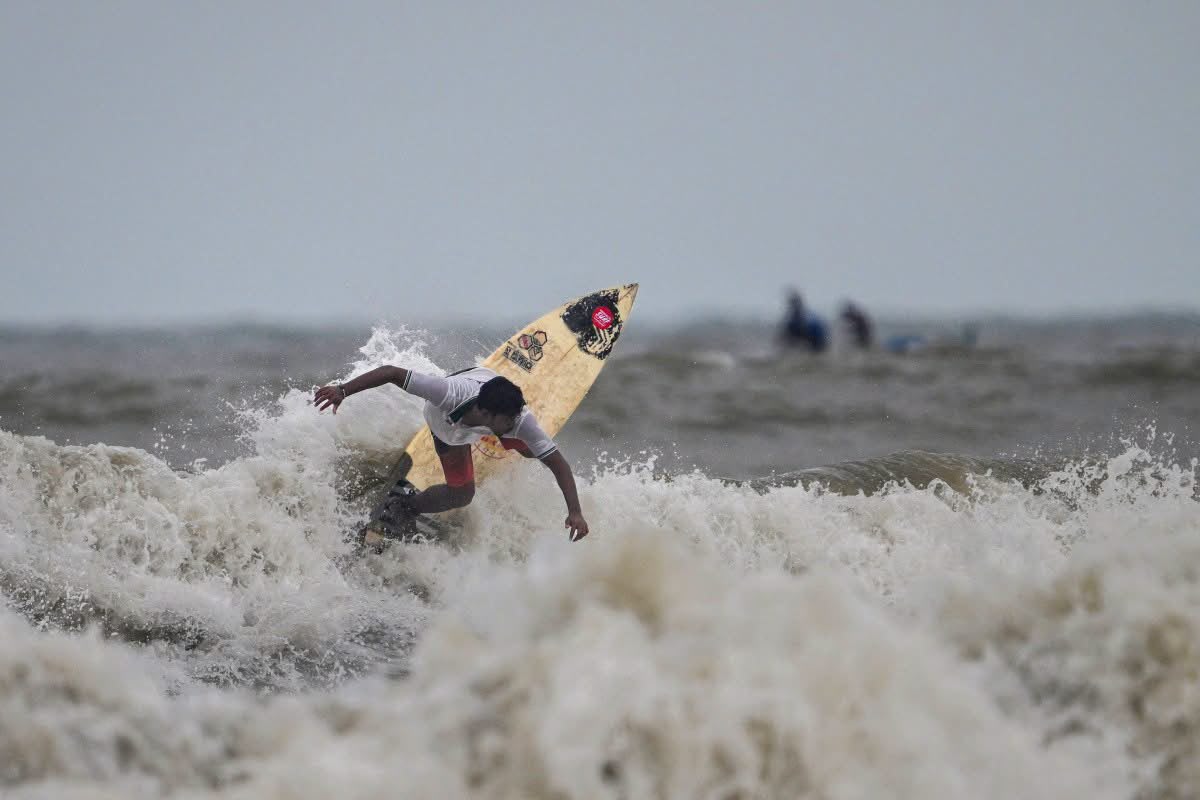
Photo: Courtesy
What’s common in their stories is that they both had to fight in their own way to pursue surfing. What started as a hobby soon turned into a passion that took them to the international stage.
The routine
Mannan has held the national championship title for four straight years, from 2021 to 2025. He represented Bangladesh at the Asian Surfing Championship in the Maldives in both 2023 and 2024, and in India in 2025. Bangladesh currently ranks ninth among boys and 11th among girls in Asian surfing. Mannan summarised his entire routine simply in one sentence: “I spend my days in the water,” the sea is his home, and he stays there. He trains whenever nature allows, since surfing depends on the weather.
Fatema’s routine looks a bit different. She’s currently studying in Class 10 and prioritises her studies. She trains the whole day on weekends, when school is off. Unlike what we often see in K-dramas or Hollywood films, where athletes get to skip classes to train, that isn’t an option in Bangladesh, where sports are still seen mainly as a hobby. Fatema trains wholeheartedly on her weekends regardless, consistently preparing for the Asian Games.
Resources and finances
Surfing is a sport that demands strong financial support. In Cox’s Bazar, that support has largely come from Rashed Alom, who brought surfboards back from America each time he visited, and with those boards, the kids of Cox’s Bazar started surfing. He gave them personal training and guidance, and because of that support, two of his students are now representing Bangladesh in the Asian Games, one male and one female.
For international competitions, most costs have been covered by the club. When the club couldn’t fully fund a trip, the surfers raised money themselves, including through GoFundMe. Surfers in Bangladesh receive no financial aid directly from the government, no salaries, no support. They surf purely for the passion of it.
The road ahead
Both Fatema and Mannan are currently training hard in their own routines, looking ahead to Japan. The Asian Games surfing competition is set for mid-September, leaving them just weeks to prepare, with their financial support still uncertain. They’ve heard they might get financial assistance from the Bangladesh Olympic Association, but nothing has been confirmed yet. Without that support, or funds raised some other way, neither of them will be able to travel to Japan at all.
Mannan said that if the competition were in India or the Maldives, they could manage the cost like before, but since it’s in Japan, funding it themselves will be close to impossible. He’s also requested the authorities to see if training abroad could be arranged, since the waves in Cox’s Bazar are too small to prepare them for what they’ll face in Japan.
The hard path
Surfing is not an easy sport in Bangladesh, and it carries a cost beyond money. Fatema faced social stereotypes, and word even reached her mother that she’d be sold off in Japan if allowed to go, a rumour with no basis, but real enough to threaten her place on the trip. She started with a group of eight girls; only two remain now. The rest got married, some by choice and some by fate.
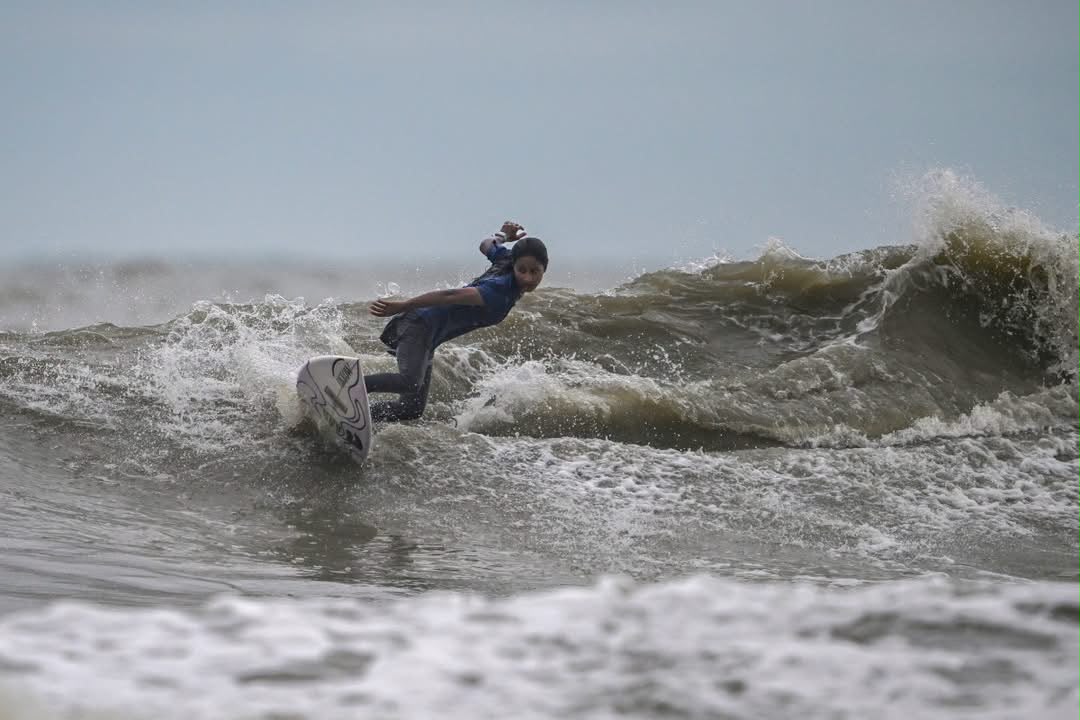
Photo: Courtesy
Mannan’s cost has looked different: leaving school young, taking beatings and scoldings from his own family before they accepted his choice, and now running a jewellery stall at Sugandha Point to help support them, all while training in between.
Both of them represent Bangladesh’s surfing community as a whole. Both have paid a personal cost to get here, and both chose to keep surfing anyway.
In a country with the world’s longest sea beach and access to the Bay of Bengal, surfing remains an underexposed and under-discussed sport. This achievement belongs not just to Mannan and Fatema, but to Bangladeshi surfing as a whole. As Mannan put it, addressing influential and high-authority figures directly, “We too are representing our country, we’re taking Bangladesh forward through surfing, and we want everyone, especially those in positions to help, to support us.”