The Fitzgerald question
When I look at Fitzgerald’s work, I do not feel that I am just reading about 1920s America. I feel like I am reading about everything and the strange way people want something just because they think having it will make everything better.
The Fitzgerald question
When I look at Fitzgerald’s work, I do not feel that I am just reading about 1920s America. I feel like I am reading about everything and the strange way people want something just because they think having it will make everything better.
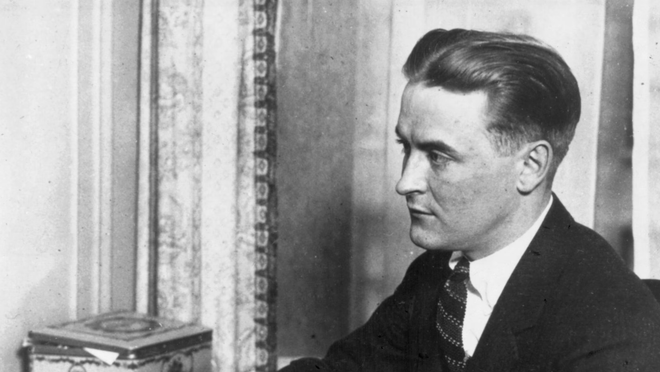
It’s interesting that some writers stay important not because they guessed what would happen. Because they knew people.
That is probably why Fitzgerald feels very close to us.
How much of our lives can we spend chasing something that may not even be real the way we imagine it?
His most prominent character, Gatsby, is rich. He throws parties. He has everything that from the outside should mean success. Yet he is still waiting. Waiting for Daisy. Waiting for the past. Waiting for the moment when everything he has built will finally mean something. There is something familiar about that. Maybe because I am from a generation that has been taught to think in milestones.
Get into a university. Build a career. Publish something. Win something. Get recognised. Make wealth. Build a name. Do more. Then do a bit more. There is always another goal a little further away. I sometimes wonder whether this is our own version of Gatsby’s green light.
We keep looking at something in the distance and telling ourselves, once I get there, I will be okay. Fitzgerald knew that sentence better than writers.
What makes him interesting to me is that he did not write about ambition from a place. He lived inside it. He experienced fame, money, excess, disappointment and professional struggle. He became linked with the glamour of the Jazz Age while also showing the emptiness that could exist under that glamour. That contrast is what makes his writing feel real.
He knew that a beautiful life and a happy life are not the same thing. That difference feels very important today.
We live in a time where success has become more visible. We see people’s achievements before we see their struggles. We see the promotion, not the uncertainty that came before it. We see the graduation photo, not the nights someone spent wondering if they were good enough. We see the organisation, the publication, the award, the new job, the photo. The end result is that we start comparing our lives with other people’s edited versions.
Fitzgerald’s world had parties and appearances. Ours has media stories, LinkedIn posts and carefully made identities. Different tools. Similar feelings. Maybe that is why The Great Gatsby still works.
Gatsby’s parties are not very different from the way people show success. People come, enjoy the show and leave without knowing the person who made it.
His characters are always surrounded by people, yet many of them are very alone. That loneliness is not loud. It sits quietly under the wealth, the conversations and the parties. Maybe that is why Fitzgerald’s writing feels so strange and sad. Even when his characters are surrounded by beauty, you can feel that something is slipping away.
There is another reason I find Fitzgerald very interesting: he understood the money side of wanting something before I had the words to talk about it. Money in his books is never just money. It means things. That makes wealth very powerful. Gatsby does not just want money. He wants what he believes money can bring. This is where his story is more than a love story.
Maybe economics tells us about how things are shared while literature reminds us to ask what those things really mean to people. That is one reason I like moving between economics and writing. Numbers can tell us what people earn. Stories can tell us what they are willing to give up to get it. Fitzgerald was very good at that second part.
I think most people who want something eventually face the question: Am I chasing this because I really want it or because I have learned that I am supposed to want it? It is not a question.
Gatsby never really separates those reasons. Maybe none of us do. That is why I do not see Fitzgerald as the writer of the Jazz Age or the author of The Great Gatsby. I see him as a writer who was very interested in the gap between the life we imagine and the life we actually live. That gap can be beautiful. It can also be painful.
On his birthday, I find myself thinking less about celebrating Fitzgerald and more about being thankful for writers like him who make us question our ideas. He makes me think about what I call success. Maybe, most importantly, what I am looking at when I look at my own green light. Because maybe dreams are not the problem. The danger begins when we give up the present completely for a future that we have never really thought about.
Then, a hundred years later, he turned 130 today, but his question is still very real: when we finally get everything, do we still know why we wanted it in the first place? Maybe that is the reason we still read him.