How teachers can help shy students find their voice
There’s always one student, or a few, in every class who talk less than the others. The teacher knows their faces but often not well enough to match them with a name on the attendance sheet. They rarely participate and they avoid interacting with the teacher.
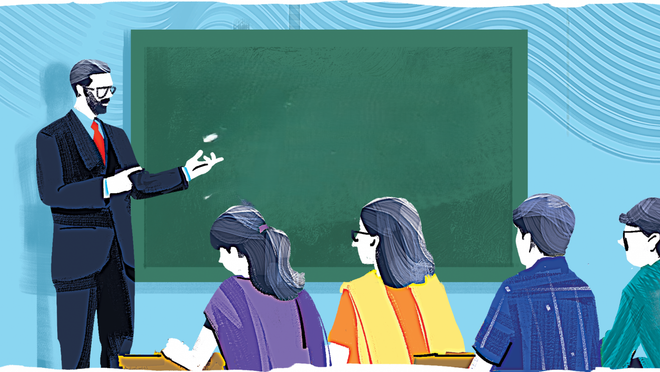
From the teacher’s side, they can easily look like bad students or students who simply do not care.
But have we ever thought about it from the student’s side? What is going through their mind while the teacher looks around the room for someone to answer?
Very often, the answer is shyness.
A shy student might fear that a wrong answer will be laughed at or that even a right answer will bring too much attention. When this fear becomes strong, it can turn into anxiety. The result is classroom reticence, where the student knows the answer but cannot bring themselves to say it.
In classrooms where the student number is way more than the teacher can handle at once, these students are often overlooked. But the problems they face are worth shedding light on.
Here are the problems shy students face and what teachers can do about them.
Classroom reticence
Teachers often ask questions in the class and students very confidently raise their hands to answer. But not always. Some students may feel extremely shy at the time. They might be eager to answer but just cannot bring themselves to raise their hands. I was one of them and I remember I would wait for the teacher to make eye contact with me so that I could give the answer. But the teacher rarely did and the most talkative students always answered first.
This is why I believe teachers should try to make eye contact with every student, every day, especially with the quiet ones. If you pay attention, you can see the eagerness in a shy student’s eyes. Just looking in their direction with a simple nod could be enough confidence for them.
There’s another technique called “Wait Time” teachers could use. When a teacher pauses for a few seconds after asking a question, all students get time to think and gather their courage. This not only improves student logic but also language use and classroom participation.
Avoidance
Many shy students deliberately avoid eye contact when the teacher asks for volunteers to read, explain or answer. They hope not to be chosen. Some teachers might assume that the students are intentionally avoiding them because they forgot to do their homework or did not study.
However, this might not always be the case.
This behaviour can also stem from the shyness that was mentioned earlier. Pretending to drop the pencil and hiding under the desk when the teacher is looking for a student to answer is more common than we think and happens more or less in every class.
In my experience, the worst thing a teacher can do is call out a shy student suddenly and give them more attention than they can take. It usually makes the fear stronger. A better way is to approach the student individually. Walk to their desk, ask quietly about their answer, tell them it is a good one and gently encourage them to share their idea with the class.
This builds confidence in a private and safe way.
Low participation in collaborative learning
In group work, shy students tend to be bystanders rather than active participants, and the confident students tend to take over. This is often linked to weak self-efficacy, which means doubting whether one’s own ideas are worth sharing. Therefore, even if the student has a better idea or another approach, they won’t share and rather do what they are told just to avoid talking.
If the teachers link this behaviour with bad performance and judge them based on this, the students will not be able to actually utilise their talent.
Rather, designing group work so that everyone gets an equal opportunity and giving each member a clear role, such as reader, writer, speaker or timekeeper, works well. The roles can rotate every lesson so that no one becomes the wallflower. This type of cooperative learning would make the students responsible and at the same time everyone’s voice would be heard.
Help-seeking avoidance
Many do not admit that they are confused because they are afraid of speaking in front of so many classmates. Many times, some of these students will go to the teacher when everyone has left the class so that they have the teacher to themselves. Because of work pressure, if the teachers throw questions like “Why didn’t you ask me this while I was teaching?” it would only shove them further into their cocoons.
Teachers can lower this barrier by keeping a personalised and individual teaching approach while lecturing. Teachers can also normalise confusion by saying openly, “If you are confused, it means I need to explain it better.” This makes asking for help feel ordinary rather than embarrassing.
All these problems share one idea.
When students feel anxious, their learning is blocked, however capable they are. When they feel safe, the anxiety lowers and their voice can come out.
Shy students do not need to be forced into the spotlight. They need patient teachers who notice them, give them support step by step and create a classroom where speaking up feels safe. It can be a little unmanageable for the teachers to pay equal attention to all the students every day, especially in the large classes of Bangladeshi classrooms.
Sometimes the best teachers are the ones who can observe the students.
Sheikh Sidratul Muntaha is an English language teacher at British Standard School.