My trip to China
My trip to China
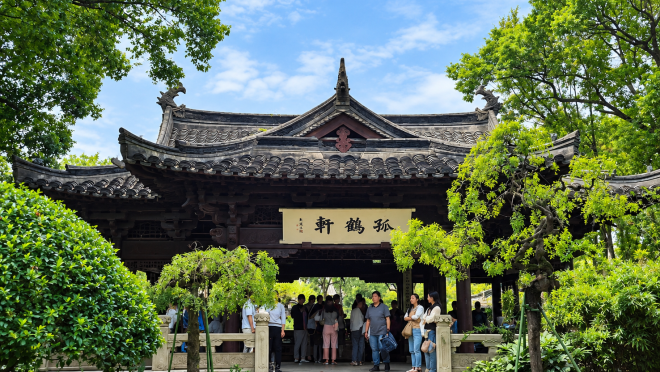
On 21 September 2026, we left Bangladesh for China for our Textile Industrial Training. The main goal was to see the Chinese textile industry closely and learn from their production systems, technology, efficiency, and management.
But after spending thirteen days in China, I realised that understanding a country’s industry is not only about visiting factories or looking at machines. To understand why an industry works the way it does, you also need to understand the people behind it, their lifestyle, culture, discipline, and way of thinking.
And for me, the first thing that caught our attention in China was something very simple: cleanliness.
From the streets and public places to universities and industrial areas, we found the surroundings remarkably clean and organised. As the days passed, I started to feel that the most interesting part of China was not its infrastructure. It was its people.
One thing I personally notice and really like about Chinese society is how family-oriented many people are.
We saw parents spending a lot of time with their children. We often saw mothers keeping their young children with them while doing their daily work. In the evenings, old people would come out, walk around, sit together, and spend time with one another at different gathering places. These may sound like very simple things, but seeing them in a country that is so modern and technologically advanced made an impression on me. Their lifestyle felt modern, yet their family life still had a very warm and traditional side.
Another thing that surprised me was how approachable many Chinese people were. As foreigners, we often found people coming forward to talk to us or simply showing curiosity about us. And there was one funny thing about communication: many of the Chinese people we met could not speak English very well, but that did not stop them from trying to communicate.
They would simply take out their phones and use a translator.
Sometimes the conversation was funny because of the translation, but they never seemed uncomfortable about it. They just found another way to communicate. It made me realise that a language barrier becomes much smaller when people are genuinely willing to communicate. This experience also made me notice how much respect Chinese people have for their own language.
Our main host institutions were Zhejiang Agriculture and Business College and Zhejiang Sci-Tech University. During our training, we noticed that many of the professors, deans, and other officials were not very comfortable speaking English. We had a Chinese bilingual guide who helped us communicate and translated our conversations.
At first, this felt a little unusual to us. But later, I started to see another side of it: their strong attachment to their own language. We also had the opportunity to take a Chinese Language course at Zhejiang Agriculture and Business College. The course was not simply about learning a few Mandarin words. They also tried to explain the meaning behind Chinese characters and how language is connected to their history and culture.
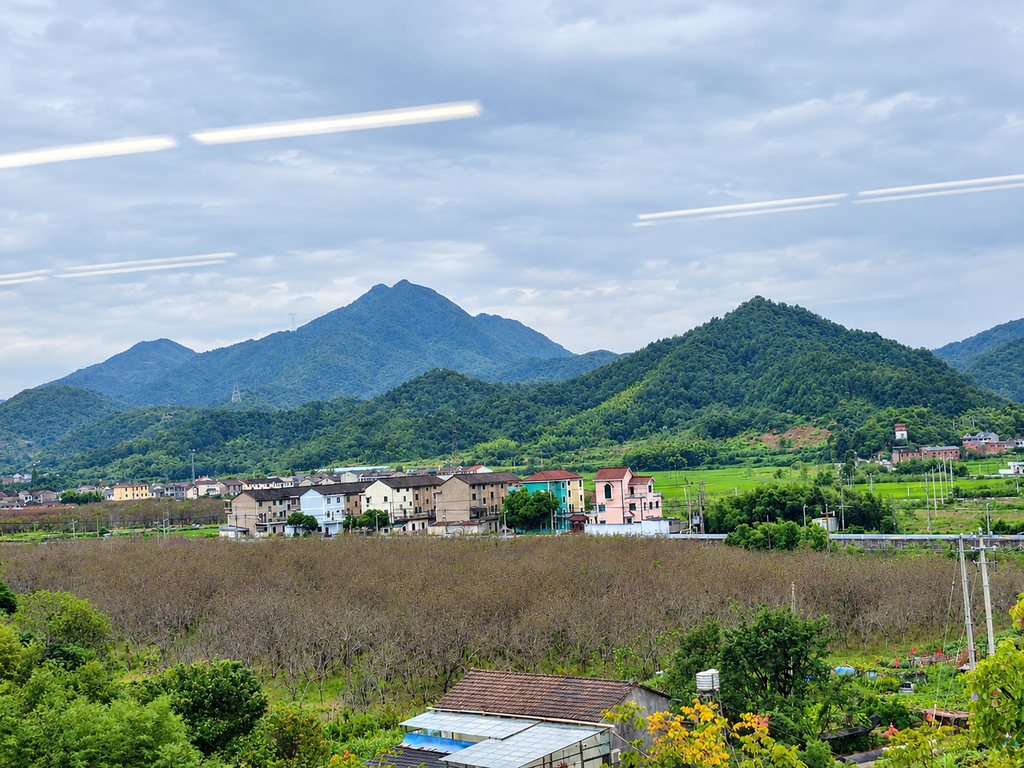
A landscape view from one of our many train journeys
That experience made me think about language differently.
For them, language is not just a tool for communication. It is also a part of their identity. And perhaps that is one reason why they hold on to it so strongly.
The same thing can be seen in their culture.
Chinese people seem deeply connected to their traditions and history. They want to preserve their culture and pass it on to the next generation through stories, activities, and everyday life. What I personally found interesting was that they seemed proud of their culture without necessarily trying to impose it on others.
They know what belongs to them, and they are comfortable with it.
Then came the part of our training that was directly connected to our academic background: the industrial visits.
When we started visiting Chinese textile industries, our perspective changed again. The biggest thing we noticed was efficiency. The production flow was highly organised. Manpower was used carefully, production processes were connected efficiently, and there was a clear focus on reducing unnecessary time, cost, and waste.
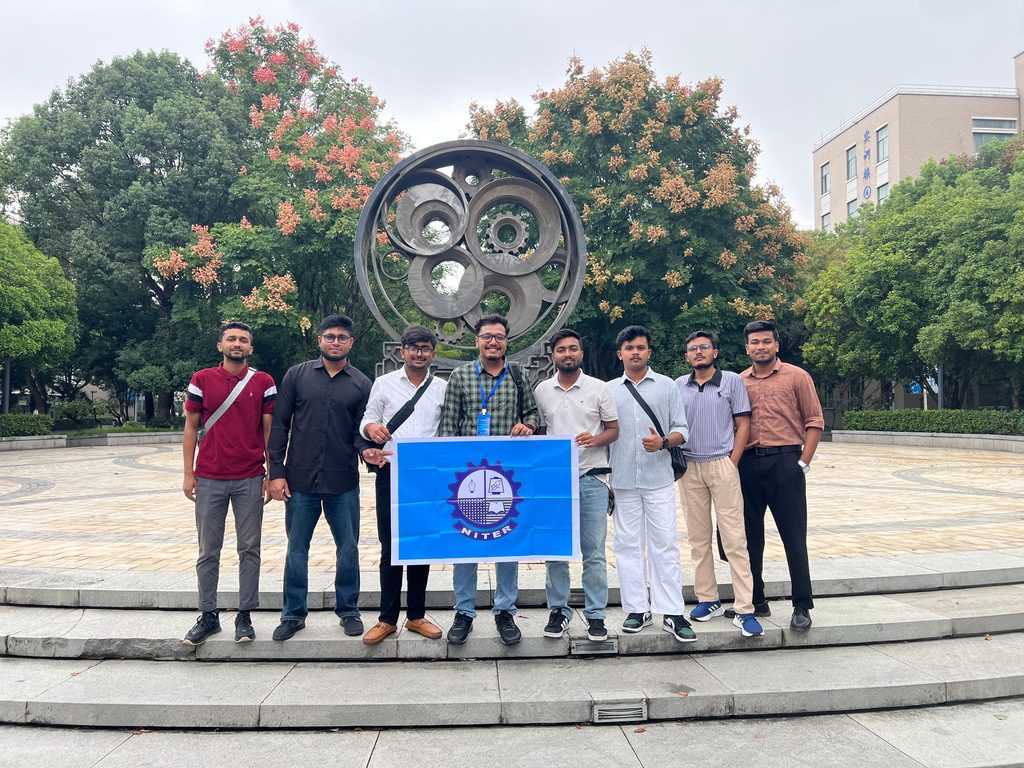
Our university group
As Textile Engineering students, we have studied many of these concepts in classrooms. But seeing them being applied inside an actual industry is completely different from reading about them in a textbook.
They showed us different processes, explained their machinery, and walked us through their production systems. However, whenever we became more curious about exact recipes, formulations, or other sensitive production details, they were quite careful about what they shared.
At first, we found it a little funny. But later, I understood the reason behind it. They were willing to show us their system, but they were not willing to give away everything that could affect their competitive advantage.
In other words, they knew where to draw the line between showing their work and revealing their trade secrets. I’ve realised one thing, and that is, you can demonstrate your system without revealing everything that makes you competitive. Another thing that caught our attention was their focus on cost minimisation and resource utilisation.
They seemed very conscious of how to get better output with less waste, less time, and the right use of manpower. For a country like Bangladesh, where the textile industry is such an important part of the economy, there is a lot we can learn from this mindset. But our learning from China was not limited to factories.
One of the more interesting things I noticed was their approach to marketing and documentation. In Bangladesh, when we go somewhere, we often take pictures, but sometimes we even joke about taking too many pictures.
In China, I noticed something quite different. Almost everywhere we went, to a university, a training programme, an industrial visit, or an event, people were taking pictures and documenting what was happening. Later, I realised that these pictures were not only about keeping memories.
They could also be used for institutional promotion, branding, and marketing. A small event could become content. A visitor could become part of an institution’s story. An industrial visit could become a way of presenting the organisation to others. That made me think about how seriously they take visibility and promotion.
Finally, there was another aspect of Chinese society that stayed with me: their manners and everyday discipline. Of course, people are different everywhere, and I would not generalise an entire nation based on a short visit. But from the people we interacted with, I often found them polite, organised, and responsible in their daily activities.
Their beliefs and worldviews may be different from ours, but I noticed that many people still seemed to follow their own principles and social rules quite firmly. We also came across situations where copied products were openly presented as copies rather than being sold as original products. I found that interesting from a business and consumer perspective.
After all these experiences, I realised that our China visit was much more than an industrial training. We went to China to learn about textiles. But we came back with lessons that went far beyond it.
We saw how family, language, culture, technology, management, industry, and marketing can all become parts of a larger system. Maybe the biggest lesson from China is not its skyscrapers, high-speed trains, or advanced machines. It is the system behind them. The way they value family, respect their language, and use technology to solve simple problems.
For me, all of these things were different chapters of the same story. And as a Textile Engineering student, perhaps the biggest lesson I brought back from China is this.
An industry does not become efficient simply because it has advanced machines. Behind an efficient industry, there must be the right mindset, disciplined people, good management, efficient resource utilisation, a strong culture, and above all, a system that actually works.
We went to China to see their textile industry. But in the end, we came back having seen something much bigger: the system behind it.