The cult of Abu Bakr: I’m sorry, he is not all that
The soap opera has reportedly amassed 1.7 billion views across its first 23 episodes, and its hero, Abu Bakr, has been elevated by social media into something close to a national standard for romantic perfection. After watching enough of it to form a fair opinion, I find it hard to understand why.
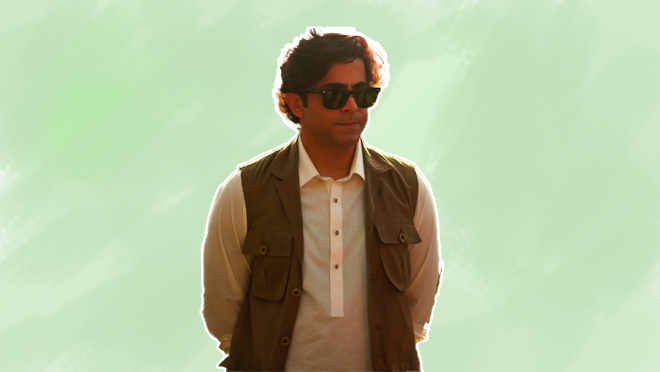
Abu Bakr is the centre of the drama and the epicentre of its problems. The show wants us to see an ideal man – very devout, polite, patient and soft-spoken.
But to me, a character worth watching is not just a list of virtues. A character should want things, make costly choices and change as a result.
Or, a fictional character that is made “an ideal” in the market should at least have humanity in them. Abu Bakr clearly isn’t. He is simply a washed-up doll, as if some teenager asked ChatGPT to draft a character that will adhere to her desires. A goody-two-shoes whose entire purpose is to make young girls fall for a prompt.
The funniest part is that even the lead actor seems to see the hollowness. In an interview with BBC Asian Network, Sheheryar Munawar has described people-pleasing and a saviour complex as two of the character’s biggest flaws.
That is an interesting, even sophisticated reading of the role. It is a pity that almost none of it is visible on screen. If the writing had intended Abu Bakr to be a flawed man whose need to rescue others shapes his choices, the drama never follows it. His flaws are presented as more evidence of how wonderful he is.
The audience, however, has taken the bait. Viewers have made him a benchmark for ideal romantic behaviour, with fans discussing his “green flags” endlessly on social media. It says something that a character this thinly drawn can be turned so easily into a checklist. When a drama presents a man as “flawless” and invites half the world to measure their husbands against him, it is no longer telling a story.
If Abu Bakr is underwritten, Zaryab is overwritten. The heroine is meant to be accomplished and ambitious, yet the drama steers her towards a path that sits uneasily with those ambitions.
The debate this has caused is telling. Durefishan Saleem, who plays Zaryab, has said she wishes the character had returned to Harvard, built a career, travelled the world and put herself first. Quite similar to a character you imagine with the merit to attend Harvard, not to quit for “love”.
I would love your opinion on the fact that I have updated my own checklist, and that includes my girlfriend/wife not offering her career-pivoting decision for my peace; I don’t want that burden.
When the actress playing a role publicly imagines a better ending than the one the writers gave her, the script does seem to have its problems. It suggests a character whose arc was dictated by what the plot needed rather than by who she was.
Zaryab spends too much of the drama reacting to the men around her instead of driving her own story. In a serial this long, with this many episodes to fill, that is an unforgivable waste of a promising protagonist. I honestly really liked her acting; she very artistically portrayed her character.
Make no mistake, a character that requires a buck load of fidgeting is very difficult to act, just to give you an example, RDJ does something similar. But, unlike most Marvel million-dollar scriptwriters, this drama lacked either the funding or the brain cells to make such captivating art.
The supporting cast fares no better. The drama has assembled impressive names, including Sania Saeed and Saba Hameed, and the audience can feel the talent straining against material that gives it little to do. Characters arrive to deliver a moral, create an obstacle or supply a reaction, and then recede. Nobody seems to have a life when the camera looks away. Conflicts feel manufactured, dialogue often reads like an overproduced never-ending soap opera, and the emotional beats are signposted so heavily as if the viewer is told what to feel before feeling it.
Then there is the matter of the direction. Saqib Khan’s work here is polished in the shallowest sense: the frames are clean, the lighting is flattering, the couple is always beautifully composed. But a drama needs more than good-looking people in good-looking rooms. Scenes drift, pacing sags, and emotional moments are stretched until they lose their charge. The romance is praised as a slow burn, but a slow burn requires tension, and tension requires obstacles that feel real. Mostly, we get lingering glances and music cues doing the work the script has not done.
The production’s attention to detail is also questionable. During the pivotal nikah sequence, a Malabar Gold & Diamonds shopping bag was clearly visible as the characters exchanged rings. Whether it was sponsorship or simple carelessness, it pulled viewers out of the most important scene in the drama and sent half the internet hunting for the brand. Viewers noted that the jeweller does not operate in Pakistan, and they were baffled by its appearance. A production that cannot keep a stray shopping bag out of its wedding scene is not in full command of its frame.
None of this is to deny the show’s popularity, which is real and considerable. The numbers are big, and the fan communities are devoted. But popularity is not quality.
The very intensity of the Abu Bakr cult reveals how little else the show offers. When viewers have to invent a hero because the script has not built one, that is a failure of craft.
Dar-e-Nijaat arrived with every advantage: a celebrated writer, a talented cast, a major channel and an audience already “brainwashed” for something that is easygoing yet looks very thoughtful and philosophical. What it delivered is a handsome, long-haired and excruciatingly hollow serial, hosted by a hero who is desired more than he is believed. Pakistani television can do much better. This has been a great waste of my time.