Why sharing meals brings people closer: The science behind eating together
Why sharing meals brings people closer: The science behind eating together
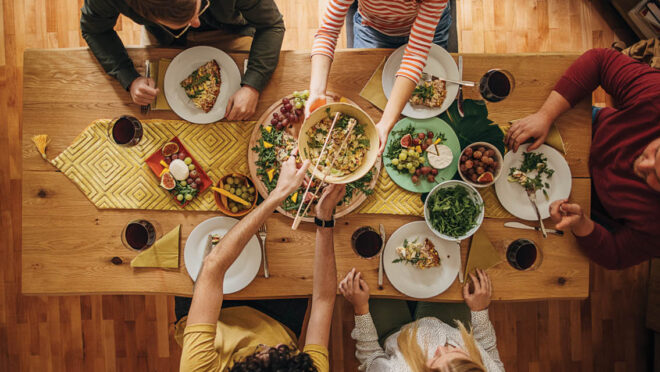
Humans have gathered to share food for thousands of years, turning meals into more than just opportunities to eat. From family dinners and gatherings with friends to festive feasts, eating together has long played an important role in building social connections and strengthening relationships.
Research suggests that sharing meals is associated with higher levels of wellbeing, greater life satisfaction and stronger social support.
The practice of sharing food may even predate modern humans. Chimpanzees and bonobos, two of humanity’s closest primate relatives, have also been observed sharing food with members of their social groups. However, sociologist Nicklas Neuman of Uppsala University in Sweden says humans have developed more complex social traditions around eating together.
The origins of communal meals remain uncertain. Researchers have suggested that early humans may have gathered around campfires to prepare and share food, creating opportunities for social interaction. Biological anthropologist Robin Dunbar of the University of Oxford suggests that spending time around fires may also have encouraged people to stay awake longer, allowing more opportunities for social bonding.
A 2017 study by Dunbar, which examined people in the UK, found that those who ate with others more frequently reported greater satisfaction with life and had more friends they could rely on for support. His statistical analysis suggested that shared meals could contribute to these social benefits.
According to Dunbar, eating activates the brain’s endorphin system, which plays an important role in forming social bonds among humans and other primates. Sharing meals can amplify this effect, much like participating in synchronised activities such as jogging together.
Eating the same food with someone may also influence how people perceive one another. Research by Ayelet Fishbach of the University of Chicago Booth School of Business found that participants in an investment simulation were more willing to give money to people with whom they had previously eaten the same candy.
Participants who shared snacks also reached satisfactory outcomes in negotiations more quickly than those who had not. Fishbach suggested that similar food preferences may have historically served as indicators of shared values and trust.
However, communal eating does not always produce positive experiences. Feasts and shared meals can also reinforce social hierarchies, control and dominance. For instance, meals organised by employers or landowners can reflect existing power relationships, while family gatherings may sometimes become uncomfortable when accompanied by criticism or pressure.
Neuman notes that although people generally enjoy eating with friends and loved ones, shared meals can also become unpleasant experiences when they involve judgement or attempts to control others.
His ongoing research into eating habits among older people in Sweden has also challenged the assumption that eating alone is necessarily associated with loneliness. Many participants said they did not feel particularly bothered by eating alone, suggesting that the experience may depend on an individual’s existing social circumstances.
For those who regularly share meals with others, occasional solitude can even be welcome, offering an opportunity to enjoy food at their own pace.
The findings suggest that while eating together can strengthen relationships and improve wellbeing, the value of a shared meal ultimately depends on the quality of the social experience surrounding it.