Why climate advocacy must move from protest to practical action
The ultimate measure of climate advocacy should not be how loudly we express our demands, but how effectively we help turn those demands into lasting change.
Why climate advocacy must move from protest to practical action
The ultimate measure of climate advocacy should not be how loudly we express our demands, but how effectively we help turn those demands into lasting change.
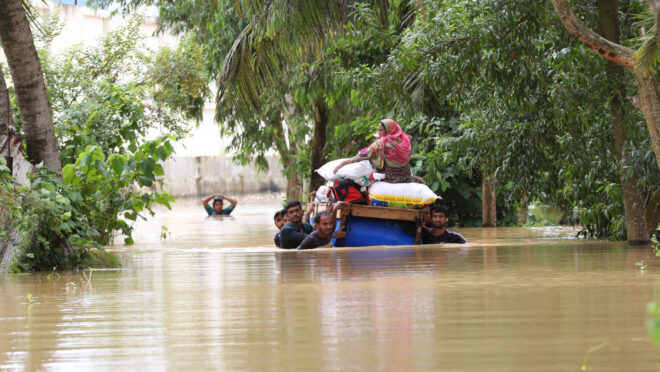
The global climate movement has become an influential force in raising public awareness, challenging political inaction and demanding accountability from governments, businesses and international institutions. Through demonstrations, campaigns and international climate conferences, activists have brought climate change and climate justice to the centre of global debate.
These efforts have been essential. They have highlighted climate inequalities, amplified the voices of vulnerable communities and challenged institutions to recognise their responsibilities. Peaceful protest remains a legitimate and necessary form of civic participation.
Yet, as the climate crisis intensifies, an important question deserves attention: Is the global climate movement doing enough to translate its demands into practical, measurable and lasting change?
The objective should not be to abandon protest or weaken accountability, but to complement traditional advocacy with practical solutions, meaningful partnerships and stronger engagement in implementation.
When raising our voices is not enough
International climate negotiations address historical responsibility, emissions reduction, climate finance, adaptation, loss and damage, technology transfer and the protection of vulnerable populations. These issues remain fundamental to climate justice.
Nevertheless, a considerable gap persists between international commitments and implementation. The United Nations Environment Programme’s Emissions Gap Report highlights the continuing gap between current climate policies and the Paris Agreement’s temperature goals. Existing commitments and policies remain insufficient to prevent dangerous levels of global warming.
Stronger partnerships between governments, communities, research institutions and civil society can turn local solutions into wider climate initiatives. However, implementation must go hand in hand with accountability, climate justice and adequate support for vulnerable countries.
These findings underline the urgency of accelerating action across energy, transport, agriculture, industry and land use. Demanding stronger commitments remains important. However, demands alone cannot develop renewable energy projects, improve agricultural resilience, mobilise investment or ensure that appropriate technologies reach communities.
Climate advocacy becomes more actionable when public pressure is supported by scientific evidence, practical solutions, credible implementation strategies, partnerships and measurable outcomes.
COP31: Lessons in the distance between commitments and delivery
COP31, hosted in Antalya, Türkiye, in November 2026, provides an important opportunity to reflect on the challenges facing international climate cooperation.
The conference demonstrated the continuing difficulties of reconciling national interests, climate responsibilities and the urgent need for collective action. Discussions surrounding fossil fuel transition, climate finance and the 1.5°C target highlighted the distance between political ambition and implementation.
Nevertheless, international climate conferences should not be assessed exclusively through the success or failure of their final negotiating texts. They also create opportunities to connect governments, businesses, research institutions, development organisations and civil society around practical initiatives.
The COP31 Electrification Delivery Package, for example, demonstrated the potential of bringing together countries, cities and businesses to advance clean energy investment, electricity grids, energy access and the electrification of transport and industry.
However, partnerships and voluntary initiatives cannot replace binding political commitments, adequate climate finance or accountability. Their value ultimately depends on whether they produce measurable results, particularly for developing countries and vulnerable communities.
COP31 reinforces an important distinction: international cooperation can accelerate implementation, but it must remain connected to political responsibility and climate justice.
From confrontation to constructive engagement
Countries participating in international climate negotiations have different economic circumstances, historical responsibilities, technological capabilities and development priorities.
Developing countries have legitimate concerns about inadequate climate finance, unequal technology access and the disproportionate burden of climate impacts. Constructive engagement must never weaken these demands or transfer additional responsibilities to countries with fewer resources.
However, cooperation can create opportunities that confrontation alone may struggle to deliver. Consider a coastal community that has developed an effective approach to protecting wetlands, managing erosion or preparing for rising sea levels. Civil society organisations and research institutions could document its experience, assess its effectiveness, identify financing requirements and connect the community with governments, universities and development agencies.
A locally developed adaptation initiative could thereby become a model that other vulnerable communities can assess and adapt. The same principle applies to climate-resilient agriculture, renewable energy, sustainable water management, ecosystem restoration and disaster preparedness. Advocacy organisations can serve as bridges between communities and the institutions, expertise and resources needed to address climate challenges.
Making solutions a central language of advocacy
The IPCC’s Sixth Assessment Report emphasises inclusive governance and the integration of scientific, Indigenous and local knowledge in climate-resilient development. Climate organisations can put these principles into practice by identifying and documenting successful local initiatives, assessing their environmental and social benefits, and connecting communities with universities and research institutions to strengthen project design and implementation. They can also help promising initiatives access climate finance by preparing feasibility studies and investment proposals, while promoting the exchange of knowledge and affordable technologies, particularly in developing countries.
Equally important is measuring and communicating the results of these initiatives, including emissions reductions, adaptation benefits, community participation, employment opportunities and financial outcomes. Such efforts would not replace government responsibilities. Rather, they would strengthen advocacy organisations’ ability to influence policy, build partnerships and turn public demands into meaningful climate action.
Climate justice must remain at the centre
A stronger focus on solutions must not become an excuse to overlook inequality. The transition to a low-carbon economy must be fair, inclusive and consistent with the principle of common but differentiated responsibilities and respective capabilities.
Developing countries need predictable and accessible climate finance, technology transfer and capacity-building support. Communities experiencing the consequences of climate change must have a meaningful role in determining their priorities.
Private-sector participation must also be accompanied by transparency, environmental integrity and safeguards against greenwashing. Solutions should not be judged simply by the amount of investment they attract. Their success should also be measured by whether they improve people’s lives, protect ecosystems, reduce vulnerability and contribute to a more equitable transition.
Climate advocacy must retain its role as an independent voice, challenging governments and businesses whenever their actions fall short of their responsibilities. Constructive engagement and strong accountability are not competing approaches. They are complementary.
A more effective climate movement
The climate movement has helped make climate change one of the defining issues of our time. Its ability to mobilise people, challenge established interests and demand justice remains indispensable. But the next phase of climate advocacy must be equally capable of demonstrating what meaningful action looks like.
Imagine a movement that not only calls for renewable energy but also helps communities identify viable projects; that not only demands adaptation finance but also documents successful local adaptation models; and that not only challenges governments to raise ambition but also monitors whether their commitments are being delivered.
Such an approach would strengthen the movement’s credibility, broaden its partnerships and increase its contribution to real-world climate action. The world does not need less climate advocacy. It needs advocacy that connects ambition with implementation, protest with participation, and accountability with practical cooperation.
The ultimate measure of climate advocacy should not be how loudly we express our demands, but how effectively we help turn those demands into lasting change.

Bidhan Chandra Pal is the Founder and Managing Director of Probha Aurora, National operator of the Foundation for Environmental Education (FEE), Bangladesh, chair of the Make a Difference Week (MADW) Global Committee 2026-27, and member of the Executive Council at the Center for Urban Studies (CUS) [email protected]
Disclaimer: The views and opinions expressed in this article are those of the author and do not necessarily reflect the opinions and views of The Business Standard.