Stonehenge's six-ton Altar Stone mystery deepens as scientists narrow search
Stonehenge's six-ton Altar Stone mystery deepens as scientists narrow search
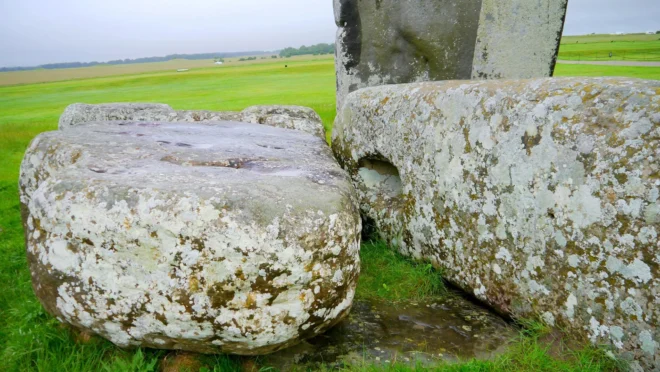
Scientists investigating the origins of Stonehenge’s six-ton Altar Stone have ruled out several potential source locations, bringing them closer to solving one of the prehistoric monument’s longest-standing mysteries.
A new international study, published in the Journal of the Geological Society, presents the most comprehensive geological investigation of the sandstone slab to date. Although earlier research pointed to northeastern Scotland as its likely origin, scientists have yet to identify an exact match.
Measuring 4.9 metres in length, the Altar Stone lies at the centre of Stonehenge on Salisbury Plain in southern England. For nearly a century, researchers believed it had been transported from western Wales, but recent geological evidence challenged that theory and pointed towards Scotland.
In the latest investigation, researchers examined the stone’s physical structure, mineral content, chemical composition and isotopic signatures to establish a detailed geological fingerprint.
They compared these characteristics with rock formations across Britain, focusing particularly on the Orcadian Basin in northeastern Scotland, previously identified as a promising source.
However, none of the locations examined so far has produced sandstone with the same combination of geological characteristics.
Professor Duncan Pirrie, Emeritus Professor at the University of South Wales and leader of the study, said the investigation had helped researchers develop a clearer understanding of the stone’s composition and eliminate several possible sources.
Professor Richard Bevins, Honorary Professor at Aberystwyth University’s Department of Geography and Earth Sciences, said the latest findings had refined the search by identifying the specific geological characteristics researchers should look for.
The findings do not rule out Scotland as the stone’s origin. Instead, they provide more precise criteria for identifying a potential match and directing future investigations.
Identifying the Altar Stone’s source could also shed light on how prehistoric communities transported enormous stones across Britain.
Stonehenge was constructed in several stages between approximately 3000 and 1600 BC. Its builders transported massive stones across considerable distances, including the smaller bluestones, which travelled around 225 kilometres from western Wales.
If the Altar Stone originated in northeastern Scotland, its journey to Salisbury Plain would have been considerably longer, raising further questions about the transportation methods and engineering capabilities of its builders.
Professor Nick Pearce, Emeritus Professor of Geochemistry at Aberystwyth University, said eliminating potential source locations was an important part of the investigation, as each exclusion narrowed the search.
The international research team included geologists and archaeologists from universities and research institutions in the UK, Canada, Italy and Sweden.