Why elephant management is essential for Bangladesh’s wildlife reform
Over the past decade, human–elephant conflict has escalated sharply. More than 100 elephants have died, alongside at least 50 human fatalities
Why elephant management is essential for Bangladesh’s wildlife reform
Over the past decade, human–elephant conflict has escalated sharply. More than 100 elephants have died, alongside at least 50 human fatalities
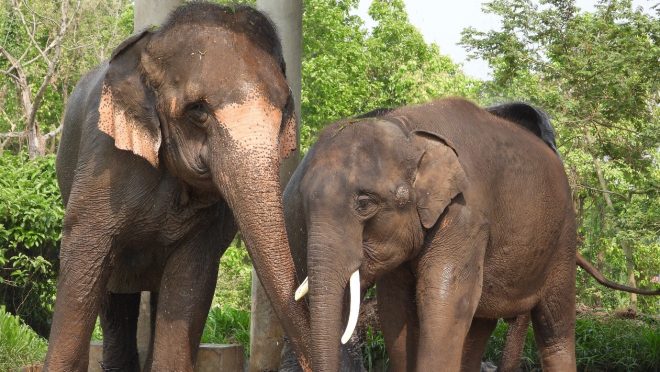
Bangladesh’s remaining population of Asian elephants is not just a conservation concern—it is a test of how the country manages wildlife as a whole. Estimated at 300 to 457 individuals, including wild, captive, and transient groups, with roughly 268 resident wild elephants identified by the IUCN Bangladesh’s 2016 paper, the species now survives in increasingly fragmented landscapes and under mounting human pressure.
Over the past decade, human–elephant conflict has escalated sharply. More than 100 elephants have died, alongside at least 50 human fatalities, according to multiple media reports and conservation sources. Behind these numbers lies a deeper management failure—one that affects elephants differently depending on whether they are in the wild or in captivity but ultimately stems from the same institutional gaps.
Elephants are highly social and intelligent animals
Elephants are highly social animals with a strongly matriarchal structure. In the wild, they are not suited to living in isolation or under human care unless forced. Adult females and their young remain in cohesive family herds, while adult males typically live alone or form small bachelor groups. Even so, mature males often rejoin herds temporarily—particularly when a female is in oestrus or when the male enters musth. During long-distance or transboundary movements, especially when leaving large forest areas, males (tuskers) may also travel with herds.
Bangladesh must ensure that no captive elephants are kept in isolation; instead, they should live in social groups or herds and not be restrained in shackles.

One of the largest Elephants in captivity in Bangladesh. This tusker is in its prime age of roughly 20 years and could contribute a lot to the elephant breeding and or management programme. Photo: Courtesy
In contrast, elephants kept in zoos, circuses, or safari settings frequently endure severe psychological stress due to isolation and confinement. They are often placed under the strict control of a human handler (mahout) and may live in constant fear of punishment using tools such as the Ankush—a sharp, hooked implement—or pointed sticks.
Captured wild elephants are often subjected to an intensive training process known as “Hadani,” designed to break their will and enforce submission. This process typically involves severe deprivation, including restricted access to food and water, and constitutes a serious form of cruelty. Elephants are not only the largest land mammals in Asia but are also highly intelligent and emotionally complex animals, making such treatment particularly troubling.
In recent years, however, some countries such as Thailand outside Bangladesh have shifted toward more humane training methods for captive elephants, relying on positive reinforcement, rewards, and environmental enrichment rather than punishment. Encouragingly, a similar approach has been initiated voluntarily by an animal welfare advocate in a government facility. While this marks a promising step forward, substantial progress is still needed to ensure that captive elephants are treated with the care and dignity they deserve.

This bull or tusker needs to join a herd. Photo: Courtesy
Managing Elephants in the Wild: A Landscape Problem
Wild elephant conservation in Bangladesh is no longer just about protecting animals—it is about managing landscapes. Elephants require large, connected habitats to survive. Yet forest fragmentation, agricultural expansion, and unplanned settlements have broken these landscapes into isolated patches. Traditional migration routes, once used for generations, are now blocked or degraded.
This has turned elephant movement into a source of conflict. When elephants move through villages and farmland, it is often not because they are “straying,” but because their ecological pathways have been cut off.
Effective wild elephant management therefore demands a shift from reactive measures to proactive planning. International best practices emphasize securing and restoring elephant corridors, maintaining habitat connectivity, and using science-based monitoring systems such as GPS tracking and early warning networks. Countries that have invested in these approaches have reduced conflict while stabilizing elephant populations.
In Bangladesh, such measures remain fragmented and underdeveloped. Conflict mitigation is often localized and short-term, lacking a coordinated national strategy. Compensation systems for affected communities are slow or insufficient, weakening public support for conservation. Without a structured, well-resourced approach, wild elephant management will continue to lag behind the scale of the problem.
Managing Elephants in Captivity: A Welfare and Regulation Gap
If wild elephants suffer from habitat loss, captive elephants suffer from neglect of standards. Bangladesh has a long history of keeping elephants in captivity—for logging, tourism, and cultural uses—but modern management frameworks have not kept pace with changing ethical and scientific expectations.
There is currently no comprehensive, enforceable national system governing captive elephant welfare. Issues such as inadequate nutrition, poor housing conditions, lack of routine veterinary care, and excessive workloads are not consistently monitored or regulated. Registration systems are incomplete, and oversight is weak.

Baby elephant is always playful and like to be in company of matriarch, aunts and sisters outside her mom. Photo: Courtesy
Globally, elephant management in captivity has shifted toward welfare-based standards. This includes regulated workloads, socialization where possible, proper enclosure design, and specialized veterinary care. Many countries now require licensing, periodic inspections, and detailed record-keeping for captive elephants.
Bangladesh lacks such a unified system. As a result, captive elephant management remains inconsistent—ranging from relatively well-maintained individuals to severely compromised conditions. This is not only a welfare issue but also a conservation concern, as poorly managed captive populations can undermine broader efforts to protect the species.
Captive elephants should be assessed and, where suitable, transferred to properly managed rehabilitation centres under the supervision of wildlife biologists and veterinarians. Only those capable of surviving independently should be considered for release into their natural habitats.
One Problem, One Solution: Institutional Reform
The contrast between wild and captive elephant management may appear stark, but both are symptoms of the same underlying issue: the absence of a dedicated, specialized authority for wildlife.
At present, wildlife responsibilities are embedded within broader forest administration structures. While forests are critical habitats, managing wildlife requires a different set of skills, priorities, and institutional focus. Around the world, this distinction has led to the creation of specialized agencies such as the U.S. Fish and Wildlife Service and the Kenya Wildlife Service, which combine scientific expertise, enforcement capacity, and policy coordination under one mandate.
Bangladesh has yet to make this transition.
Toward a Bangladesh Wildlife Services
The growing crisis in elephant management—both in the wild and in captivity—makes a compelling case for establishing a Bangladesh Wildlife Services under the Ministry of Environment, Forest and Climate Change.
Such an institution could unify and modernize elephant management in several keyways:
- For wild elephants, it could lead national-level planning for habitat connectivity, secure and restore corridors, deploy early warning systems, and standardize conflict mitigation and compensation mechanisms.
- For captive elephants, it could establish enforceable welfare standards, introduce mandatory registration and licensing, ensure regular veterinary oversight, and regulate use in tourism and labour.
- For both, it could integrate scientific research, population monitoring, and cross-border coordination into a single, coherent framework.
Beyond elephants, the same institutional structure would strengthen biodiversity management across forests, wetlands, and marine ecosystems, while improving enforcement against wildlife crime and encroachment.
A Defining Opportunity
Elephants are often described as a flagship species—but in Bangladesh, they are more than that. They reveal the strengths and weaknesses of the country’s entire conservation system.
If wild elephants continue to lose their habitats and captive elephants remain without proper standards, the consequences will extend far beyond a single species. They will signal a broader failure to manage biodiversity in a rapidly changing landscape.
Creating a Bangladesh Wildlife Services is therefore not simply a bureaucratic reform. It is a necessary step toward a coordinated, science-based, and humane system of wildlife management—one capable of addressing the realities of both wild ecosystems and captive care.
The future of Bangladesh’s elephants may well determine the future of its wildlife.