BoJack Horseman: A cartoon horse, an existential crisis, and everything in between
There is something uniquely cruel about a show that makes you laugh at a joke and then, three seconds later, makes you wonder whether you have ever been genuinely happy in your life.
BoJack Horseman: A cartoon horse, an existential crisis, and everything in between
There is something uniquely cruel about a show that makes you laugh at a joke and then, three seconds later, makes you wonder whether you have ever been genuinely happy in your life.
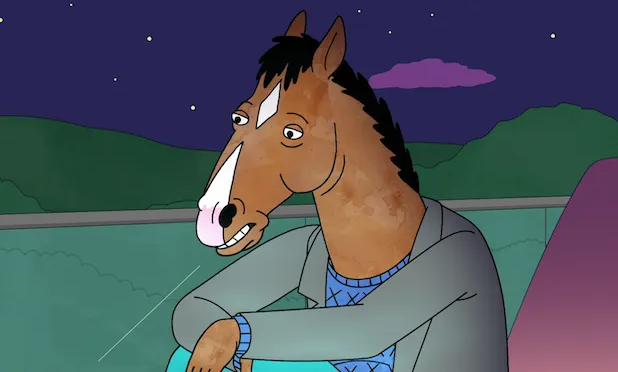
BoJack Horseman is that kind of show. You start watching it for the absurdity of a washed-up sitcom star who happens to be a horse, stay for the ridiculous animal puns and Hollywood satire, and eventually find yourself emotionally attached to a collection of deeply flawed fictional characters who probably need professional help more than they need another season of television.
What begins as an adult animated comedy gradually becomes one of the most painfully honest explorations of depression, addiction, loneliness, self-sabotage, and the human tendency to keep making the same mistakes while desperately hoping for different outcomes. It is funny, clever, and occasionally wholesome, but it can also leave you staring at your ceiling at three in the morning, questioning the fundamental nature of existence. And somehow, a cartoon horse manages to make all of it feel painfully human.
One thing worth mentioning before getting into the heavier themes: BoJack Horseman is rated TV-MA on Netflix in the United States, although ratings can vary by region. It contains strong language, substance abuse, depression, and other mature themes. If you are already emotionally vulnerable, struggling with your mental health, or looking for something comforting to escape into, this might not be the best show to start right now. It has a way of finding the feelings you have been trying to avoid and putting them into words you wish you had never heard.
One of the reasons I love this show is that it understands the difference between being unhappy and being able to explain why you’re unhappy. In one of its most painfully relatable moments, BoJack describes what happens when people ask him how he is doing: “Usually when people ask how I’m doing, the real answer is I’m doing shitty, but I can’t say I’m doing shitty, because I don’t even have a good reason to be doing shitty. So if I say, ‘I’m doing shitty,’ then they say, ‘Why? What’s wrong?’ And I have to be like, ‘I don’t know, all of it?’ So instead, when people ask me how I’m doing, I usually say, ‘I am doing so great.'”
It is funny in the way that things become funny when they are a little too close to home. Sometimes, you don’t have a dramatic tragedy to point to, a single event that explains why you cannot get out of bed or why everything feels inexplicably heavy. You might even have a perfectly reasonable life on paper. Yet something inside you feels wrong, and explaining it to someone who expects a neat answer feels like another exhausting responsibility. So you smile, say you’re doing great, and move on.
The show understands that feeling. It also understands that understanding someone’s pain does not mean pretending their behaviour has no consequences.
BoJack is not a good person simply because he is a sad person. He hurts people, makes selfish decisions, and repeatedly damages relationships, sometimes while fully understanding what he is doing. He can recognise his own patterns and still fail to change them. That is one of the show’s most uncomfortable truths: knowing what is wrong with you does not automatically give you the courage to fix it.
There is a scene between BoJack and Wanda that captures his fear of being truly known. When Wanda asks what happened, BoJack responds: “Same thing that always happens. You didn’t know me and then you fell in love with me. And now you know me.”
That line hurts because it sounds like someone who has already decided how every relationship must end. BoJack believes that being loved depends on people not seeing him clearly, and that intimacy inevitably destroys the illusion. Instead of trusting someone with his imperfections and working through them, he often treats disappointment as inevitable. It is a tragic way to live, particularly because the belief can become a self-fulfilling prophecy: if you are convinced everyone will eventually leave, you might start behaving in ways that make staying almost impossible.
Wanda offers another line that deserves to be remembered long after the episode ends: “When you look at someone through rose-coloured glasses, all the red flags just look like flags.”
It is one of the sharpest observations the series makes about love. When you care about someone, their flaws can become quirks, their cruelty can become a bad day, and their repeated mistakes can become promises that they will eventually change. You may find yourself falling in love with someone’s potential while ignoring the reality of who they are right now. The show does not suggest that loving an imperfect person is foolish; it asks what happens when love makes you unable to see the harm being done.
But BoJack Horseman is not just a parade of misery, and this is where its writing becomes remarkable. It can be hilariously stupid one minute and emotionally devastating the next. Its animal characters are not merely visual jokes; the show’s strange world gives it room to explore human behaviour without making every episode feel like a lecture. Its supporting characters have their own ambitions, failures, relationships, and lives beyond BoJack, reminding us that everyone is the protagonist of their own story, even when they are only a supporting character in ours.
My favourite episode is “Fish Out of Water,” and it is beautiful for reasons that are difficult to explain without spoiling its magic. BoJack travels underwater, where the environment makes ordinary communication almost impossible. The episode is largely silent, and that silence becomes its greatest strength. Instead of relying on long conversations to explain what a character feels, it lets gestures, expressions, music, and small acts of kindness do the talking.
BoJack encounters a baby seahorse that becomes separated from its father, and he ends up helping the little creature find its way home. What makes this story so touching is its simplicity. BoJack is usually so consumed by himself, his regrets, and his desperate need for validation that it is easy to forget he can still care about someone else. Here, he spends his time helping a tiny, vulnerable creature that cannot offer him fame, praise, or anything particularly useful in return. For a little while, he is simply doing something kind.
The underwater setting makes this even more meaningful. BoJack cannot explain himself through the usual stream of jokes, excuses, or self-loathing. The silence strips away some of his defences and allows the episode to communicate through actions rather than declarations. It becomes a reminder that compassion does not always need a grand speech, and that even people who struggle to care for themselves can sometimes show extraordinary tenderness towards others. The ending is bittersweet in a way that feels quintessentially BoJack: a beautiful moment can exist without magically fixing everything that came before it.
And then there is the music. The soundtrack is one of the show’s greatest strengths, not simply because the songs are good, but because they often carry the emotions the characters cannot articulate. Catherine Feeny’s “Mr. Blue,” used in the series finale, is particularly haunting. It feels gentle and comforting, yet there is an unmistakable sadness underneath it, as though the song understands that some endings are not neat resolutions but quiet acknowledgements that time has passed and things have changed. It is the sort of song that can make you nostalgic for something you cannot quite name.
If there is anything to learn from BoJack Horseman, it is that pain deserves compassion, but compassion should not become an excuse for refusing accountability. Your past can explain why you struggle without determining what you do next. You can be a damaged person and still have a responsibility to the people around you. You can regret what you have done and still need to make amends. And you can want to change desperately while recognising that wanting it is only the beginning.
The show does not promise that every person becomes better, that every relationship can be repaired, or that one sincere apology will undo years of damage. Sometimes, growth is slow, unglamorous, and frustratingly incomplete. Sometimes, all you can do is make a different choice the next time the opportunity presents itself.
That is why I would not recommend watching BoJack Horseman when you are emotionally vulnerable. It can take the thoughts you have been trying to avoid, give them a voice, and leave them echoing in your head long after the credits roll. If you are already struggling, there is no shame in saving it for another time. You do not have to turn every difficult feeling into a lesson, and you certainly do not need to watch a fictional horse dismantle his life to prove that you understand suffering.
But if you are in a place where you can engage with its darkness, BoJack Horseman is worth watching. It is clever, absurd, tender, uncomfortable, and unexpectedly wholesome. It makes you laugh at things you probably should not laugh at, then asks you to think about why you laughed in the first place.
Ultimately, it reminds us that understanding ourselves is not the same as forgiving ourselves for everything, that loving someone does not mean overlooking every red flag, and that a person is more than their worst moment, but never entirely free of the consequences of their choices. Sometimes, a story does not make life easier to understand. It simply makes you feel a little less alone in trying to understand it.