I watched 74 episodes in three days, and I need to talk about it
There are anime you watch, anime you enjoy, and then there is Monster, an anime that quite literally crawls into your mind, settles into its darkest corners, and refuses to leave even after the credits have rolled.
I watched 74 episodes in three days, and I need to talk about it
There are anime you watch, anime you enjoy, and then there is Monster, an anime that quite literally crawls into your mind, settles into its darkest corners, and refuses to leave even after the credits have rolled.
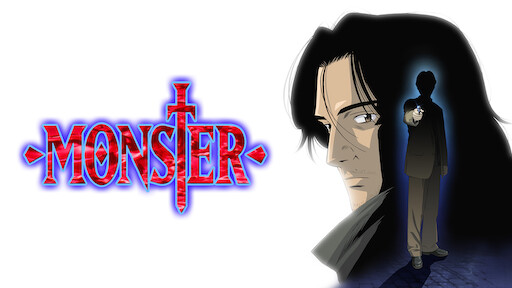
I watched all 74 episodes in three days, and somehow, even now, I still find myself thinking about it. I genuinely do not know whether to congratulate myself for the commitment or question how I managed to function as a human being during those three days, but I do know that this story left an impression on me that very few fictional works ever have.
Naoki Urasawa, what on earth was going through your mind when you created this masterpiece?
What makes Monster so extraordinary is that it does not need supernatural powers, elaborate magic systems, or world-ending battles to make your skin crawl. It does not need an antagonist who wants to destroy humanity simply because he is evil, nor does it rely on exaggerated displays of power to establish a sense of danger. Instead, it takes something far more frightening and places it right in front of you: a human being. Someone who can walk into a room, speak softly, smile politely, and leave behind a sense of dread that no amount of screaming could ever recreate.
And Johan Liebert. I genuinely do not know where to begin with this man.
I understand why he became who he is, or at least I understand the circumstances and ideas that shaped him, and somehow that makes everything so much more disturbing. There is something profoundly unsettling about recognising the logic behind a character’s existence while being horrified by what that character does with it. Johan is not frightening merely because he is intelligent, manipulative, or capable of terrible things; he is frightening because he understands how fragile the human mind can be, how easily identity can be dismantled, and how a person’s deepest fears can become weapons against them.
He does not need to overpower people when he can make them question themselves. He does not need to be everywhere when he can leave an idea behind and allow it to consume someone from within. Every time I thought I had figured him out, I found myself confronted with another question, another layer, another reason to sit there in absolute silence. He is the kind of antagonist who makes you reconsider what a villain can even be, because his greatest weapon is not physical strength but his understanding of the people around him.
And the most disturbing part is that I cannot simply dismiss him as a monster who appeared out of nowhere. The series forces you to confront the circumstances, the cruelty, and the ideas that helped shape him without making the consequences of his actions any less horrifying. Understanding him does not mean excusing him, but it does make it almost impossible to look away. Johan Liebert is, without exaggeration, one of the greatest villains I have ever encountered in fiction. I have watched stories attempt to create unforgettable antagonists, and this man has somehow made the entire exercise look unfair.
And then there is that dialogue, the one about the monster growing inside me. The German words have stayed with me, so I have to include the sentiment here in English: “Look at me! Look at me! The monster inside me has grown so big!”
The exact wording may vary depending on the translation, but the feeling behind it is what matters: the horror of something terrible growing within a person until it threatens to consume everything they once were. There is something almost unbearable about that image, because the monster is no longer merely an external threat lurking in the dark; it becomes something intimate, something shaped by the world, hidden beneath the surface, and slowly allowed to grow. I LOVE how Monster makes a simple idea like this feel existentially terrifying.
But for all my fascination with Johan, I cannot talk about this anime without talking about Dr Kenzo Tenma, because GOODNESS, WHAT A MAN!
Tenma is such a genuinely good person that watching him navigate a world this cruel almost feels like witnessing someone carry a candle through a hurricane. He is compassionate without being naïve about the suffering around him, and his commitment to the value of human life becomes the moral centre of a story that constantly challenges whether such a belief can survive in the real world. What I love most about him is that his goodness is not presented as some effortless quality that makes everything work out; it is a decision he continues to make, even when that decision costs him dearly.
Tenma and Johan are fascinating together precisely because they represent such different relationships with human life, morality, and the consequences of one’s choices. One refuses to abandon the belief that a life has value, while the other forces everyone around him to confront just how terrifying the absence of that belief can become. I could write an entire essay about their dynamic alone, and I probably should, because apparently my brain decided that recovering from this anime was optional.
One of the most beautiful things about Monster is how alive its world feels. Even characters who appear briefly can leave an impression, carrying their own histories, fears, regrets, and little fragments of humanity. People who initially seem insignificant can become deeply meaningful, and the series has this incredible ability to make you care about someone simply by allowing you to understand them. Its kindness is often quiet, its cruelty is painfully ordinary, and its most wholesome moments feel precious precisely because the surrounding world can be so bleak.
I found myself becoming attached to people I never expected to care about, celebrating little moments of warmth, and feeling genuinely devastated by how complicated human beings can be. Nobody feels like they exist merely to fill a scene; there is a sense that everyone has a life beyond the moment we happen to witness them. For a story that explores such horrifying ideas, Monster has an astonishing amount of tenderness.
What makes the entire experience even more impressive is its patience. The pacing is deliberate, the mystery unfolds gradually, and the story trusts you to connect its pieces rather than explaining every little thing immediately. Almost every conversation feels capable of revealing something about a character, a society, or the nature of evil itself. Watching 74 episodes in three days probably did not help my ability to process any of it, but I cannot imagine experiencing this story without becoming completely consumed by it.
I went into Monster expecting a psychological thriller, and I came out thinking about morality, identity, trauma, human cruelty, compassion, and the terrifying possibility that the difference between an ordinary person and something monstrous is not always as simple as we would like to believe.
I understand why Johan did what he did, yet I am still speechless. I adore Tenma. I love these characters. I am fascinated by the questions this story refuses to answer neatly, and I am almost offended by how much this anime has occupied my mind since 2024.
Monster is not simply a story about finding a monster. It is a story about understanding how one comes to exist, what makes someone recognise it, and whether humanity can still mean something in a world that has given it so many reasons not to. Give it a watch, I guess?